


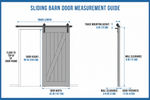
Measuring for a barn door is different from measuring for a traditional hinged door. Because barn doors slide across the wall instead of sitting inside a frame, correct sizing depends on overlap, wall clearance, and track length.
If you're learning how to measure for barn doors — whether single or double — this guide walks you through the process clearly so you can avoid installation problems and ordering mistakes.
Why Proper Measurement Matters
Barn doors do not seal inside a jamb. They mount over the opening and rely on overlap for coverage.
If the door is too small:
-
You’ll see side gaps
-
Privacy is reduced
-
Light passes through
If the door is too large:
-
It may not fit the available wall space
-
The track may not install properly
-
It can interfere with switches or trim
Accurate measurements ensure proper coverage, smooth operation, and clean visual alignment.

Tools You’ll Need
-
Tape measure
-
Level
-
Pencil and paper
-
Stud finder (recommended)
-
Ladder (if ceiling height requires it)
Measure carefully and write everything down.
Step 1: Measure the Opening Width
Measure the width of the doorway:
-
From trim edge to trim edge
OR -
Drywall edge to drywall edge (if no casing)
Take three measurements:
-
Top
-
Middle
-
Bottom
Use the widest measurement.

How Wide Should the Barn Door Be?
A barn door should be 2–4 inches wider than the opening.
Example:
Opening width = 30 inches
Recommended door width = 32–34 inches
This overlap improves privacy and eliminates visible gaps.
Step 2: Measure the Opening Height
Measure from:
Finished floor → Top of opening or trim.
Take measurements on both sides and use the taller number.
How Tall Should the Barn Door Be?
The door should extend 1–2 inches above the opening to ensure proper coverage.
Also consider flooring:
-
Carpet may compress
-
Tile and hardwood do not
Most installations leave about ½ inch of bottom clearance for smooth sliding.
Step 3: Check Wall Space Beside the Opening
This is critical.
For a single barn door to open fully, you need wall space equal to:
Door width + 1–2 inches.
Example:
36-inch door → at least 37–38 inches of clear wall space.
Check for:
-
Light switches
-
Thermostats
-
Outlets
-
Adjacent doorways
-
Furniture placement
If wall space is limited, you may need to adjust door size.

Step 4: Measure Clearance Above the Opening
Measure from the top of the trim to the ceiling.
Most barn door hardware requires:
6–8 inches of vertical clearance.
This space accommodates:
-
Track
-
Mounting brackets
-
Door hangers
Always confirm the hardware requirements before ordering.
Step 5: Account for Trim & Baseboards
Barn doors mount on the wall surface. Trim and baseboards push the door outward.
Measure:
-
Trim thickness
-
Baseboard depth
If trim is thick, you may need:
-
Track spacers
-
Offset mounting hardware
Ignoring trim depth can cause the door to tilt or sit unevenly.
How to Measure for Double Barn Doors
Double barn doors require extra attention.
1. Measure Total Opening Width
Measure the full opening width just as you would for a single door.
Example:
Opening width = 72 inches.
Divide by two:
Each panel should cover at least 36 inches.

2. Add Center Overlap
Each panel should overlap the center by 1–2 inches.
Without overlap:
-
A visible gap appears
-
Privacy decreases
For a 72-inch opening, two 38-inch doors often provide better coverage than two 36-inch doors.
3. Check Wall Space on Both Sides
You need equal sliding space on both sides.
Each side must accommodate:
Panel width + clearance.
Uneven wall space can prevent one panel from opening fully.
How to Measure Track Length
Track length is often overlooked.
For single barn doors:
Track length should be at least twice the door width.
Example:
36-inch door → 72-inch track minimum.
This allows the door to slide fully clear of the opening.
For double doors:
Track length must accommodate both panels.
Also account for:
-
Stop placement
-
Wall clearance at each end
A track that’s too short prevents full opening.
Standard Barn Door Size Reference
Common interior barn door sizes:
Single doors:
-
30”
-
32”
-
36”
-
42”
Double doors:
-
24–36 inches per panel
Heights:
-
80”
-
84”
-
96”
These are guidelines only. Always measure your actual opening.
Common Measuring Mistakes to Avoid
-
Ordering a door the same width as the opening
-
Forgetting wall clearance
-
Ignoring trim thickness
-
Not checking ceiling height
-
Choosing a track that’s too short
Double-check everything before placing your order.
Quick Measurement Checklist
Before ordering, confirm:
✔ Opening width measured
✔ Opening height measured
✔ Wall clearance verified
✔ Ceiling clearance confirmed
✔ Trim depth accounted for
✔ Track length calculated
✔ Single or double door confirmed
If all boxes are checked, you’re ready to move forward.
Frequently Asked Questions
How much wider should a barn door be than the opening?
A barn door should be 2–4 inches wider than the opening to ensure proper side overlap.
How do you measure for double barn doors?
Measure the full opening width, divide by two, and add 1–2 inches of overlap per panel. Confirm equal wall space on both sides.
How much space do you need above a barn door?
Most hardware systems require 6–8 inches above the opening.
What size track do I need?
For a single door, the track should be at least twice the width of the door. Double doors require a longer track to accommodate both panels.
Final Thoughts
Measuring for a barn door is straightforward — but precision matters. Because barn doors rely on overlap and wall clearance rather than a traditional frame, small errors can lead to visible gaps or installation issues.
Measure carefully, confirm hardware requirements, and double-check wall space before ordering. A few extra minutes spent measuring ensures a clean installation and smooth operation.
How to Measure for Barn Doors (Step-by-Step Guide)

Measuring for a barn door is different from measuring for a traditional hinged door. Because barn doors slide across the wall instead of sitting inside a frame, correct sizing depends on overlap, wall clearance, and track length.
If you're learning how to measure for barn doors — whether single or double — this guide walks you through the process clearly so you can avoid installation problems and ordering mistakes.
Why Proper Measurement Matters
Barn doors do not seal inside a jamb. They mount over the opening and rely on overlap for coverage.
If the door is too small:
-
You’ll see side gaps
-
Privacy is reduced
-
Light passes through
If the door is too large:
-
It may not fit the available wall space
-
The track may not install properly
-
It can interfere with switches or trim
Accurate measurements ensure proper coverage, smooth operation, and clean visual alignment.
Tools You’ll Need
-
Tape measure
-
Level
-
Pencil and paper
-
Stud finder (recommended)
-
Ladder (if ceiling height requires it)
Measure carefully and write everything down.
Step 1: Measure the Opening Width
Measure the width of the doorway:
-
From trim edge to trim edge
OR -
Drywall edge to drywall edge (if no casing)
Take three measurements:
-
Top
-
Middle
-
Bottom
Use the widest measurement.
How Wide Should the Barn Door Be?
A barn door should be 2–4 inches wider than the opening.
Example:
Opening width = 30 inches
Recommended door width = 32–34 inches
This overlap improves privacy and eliminates visible gaps.
Step 2: Measure the Opening Height
Measure from:
Finished floor → Top of opening or trim.
Take measurements on both sides and use the taller number.
How Tall Should the Barn Door Be?
The door should extend 1–2 inches above the opening to ensure proper coverage.
Also consider flooring:
-
Carpet may compress
-
Tile and hardwood do not
Most installations leave about ½ inch of bottom clearance for smooth sliding.
Step 3: Check Wall Space Beside the Opening
This is critical.
For a single barn door to open fully, you need wall space equal to:
Door width + 1–2 inches.
Example:
36-inch door → at least 37–38 inches of clear wall space.
Check for:
-
Light switches
-
Thermostats
-
Outlets
-
Adjacent doorways
-
Furniture placement
If wall space is limited, you may need to adjust door size.
Step 4: Measure Clearance Above the Opening
Measure from the top of the trim to the ceiling.
Most barn door hardware requires:
6–8 inches of vertical clearance.
This space accommodates:
-
Track
-
Mounting brackets
-
Door hangers
Always confirm the hardware requirements before ordering.
Step 5: Account for Trim & Baseboards
Barn doors mount on the wall surface. Trim and baseboards push the door outward.
Measure:
-
Trim thickness
-
Baseboard depth
If trim is thick, you may need:
-
Track spacers
-
Offset mounting hardware
Ignoring trim depth can cause the door to tilt or sit unevenly.
How to Measure for Double Barn Doors
Double barn doors require extra attention.
1. Measure Total Opening Width
Measure the full opening width just as you would for a single door.
Example:
Opening width = 72 inches.
Divide by two:
Each panel should cover at least 36 inches.
2. Add Center Overlap
Each panel should overlap the center by 1–2 inches.
Without overlap:
-
A visible gap appears
-
Privacy decreases
For a 72-inch opening, two 38-inch doors often provide better coverage than two 36-inch doors.
3. Check Wall Space on Both Sides
You need equal sliding space on both sides.
Each side must accommodate:
Panel width + clearance.
Uneven wall space can prevent one panel from opening fully.
How to Measure Track Length
Track length is often overlooked.
For single barn doors:
Track length should be at least twice the door width.
Example:
36-inch door → 72-inch track minimum.
This allows the door to slide fully clear of the opening.
For double doors:
Track length must accommodate both panels.
Also account for:
-
Stop placement
-
Wall clearance at each end
A track that’s too short prevents full opening.
Standard Barn Door Size Reference
Common interior barn door sizes:
Single doors:
-
30”
-
32”
-
36”
-
42”
Double doors:
-
24–36 inches per panel
Heights:
-
80”
-
84”
-
96”
These are guidelines only. Always measure your actual opening.
Common Measuring Mistakes to Avoid
-
Ordering a door the same width as the opening
-
Forgetting wall clearance
-
Ignoring trim thickness
-
Not checking ceiling height
-
Choosing a track that’s too short
Double-check everything before placing your order.
Quick Measurement Checklist
Before ordering, confirm:
✔ Opening width measured
✔ Opening height measured
✔ Wall clearance verified
✔ Ceiling clearance confirmed
✔ Trim depth accounted for
✔ Track length calculated
✔ Single or double door confirmed
If all boxes are checked, you’re ready to move forward.
Frequently Asked Questions
How much wider should a barn door be than the opening?
A barn door should be 2–4 inches wider than the opening to ensure proper side overlap.
How do you measure for double barn doors?
Measure the full opening width, divide by two, and add 1–2 inches of overlap per panel. Confirm equal wall space on both sides.
How much space do you need above a barn door?
Most hardware systems require 6–8 inches above the opening.
What size track do I need?
For a single door, the track should be at least twice the width of the door. Double doors require a longer track to accommodate both panels.
Final Thoughts
Measuring for a barn door is straightforward — but precision matters. Because barn doors rely on overlap and wall clearance rather than a traditional frame, small errors can lead to visible gaps or installation issues.
Measure carefully, confirm hardware requirements, and double-check wall space before ordering. A few extra minutes spent measuring ensures a clean installation and smooth operation.


