


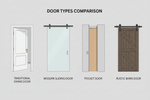
Choosing the right interior door system isn’t just about style—it affects how your space functions, how rooms connect, and how efficiently your layout works. The most common interior door options today include swing doors, sliding (by-pass) doors, pocket doors, and barn doors, each offering different advantages depending on space, privacy, and design goals.
This guide compares these four popular door types to help you choose the best solution for your home.
Swing Doors
Swing doors are the most traditional and widely used interior doors. They operate on hinges and open inward or outward in an arc.
Best for:
-
Bedrooms
-
Bathrooms
-
Home offices
-
Standard room openings
Pros:
-
Excellent privacy and sound separation
-
Tight seal when closed
-
Familiar and easy to use
-
Wide range of styles and finishes
Cons:
-
Requires clearance for the door swing
-
Can interfere with furniture in tight spaces
Bottom line: Swing doors are ideal when space allows and privacy matters most.

Sliding (By-Pass) Doors
Sliding or by-pass doors operate by sliding one or more panels horizontally along a track. They are commonly used where swing clearance is limited.
Best for:
-
Closets
-
Pantries
-
Laundry rooms
-
Wide openings
Pros:
-
No swing clearance required
-
Space-saving design
-
Clean, modern appearance
-
Easy access for closets
Cons:
-
Less sound insulation
-
Panels overlap, limiting full opening access
-
Track requires occasional maintenance
Bottom line: Sliding doors are practical and efficient for spaces where swing doors aren’t possible.

Pocket Doors
Pocket doors slide into a concealed wall cavity, disappearing completely when open.
Best for:
-
Bathrooms
-
Small rooms
-
Hallways
-
Tight floor plans
Pros:
-
Maximum space efficiency
-
Clean, minimalist look
-
Allows full opening width
-
Ideal for compact layouts
Cons:
-
Requires wall cavity space
-
More complex installation
-
Harder to retrofit in existing homes
Bottom line: Pocket doors are excellent for saving space but work best when planned during construction or renovation.

Barn Doors
Barn doors slide along an exposed track mounted above the doorway and remain visible when open.
Best for:
-
Bedrooms
-
Home offices
-
Accent openings
-
Decorative transitions
Pros:
-
Strong visual impact
-
No wall cavity required
-
Easy retrofit option
-
Wide range of modern and rustic designs
Cons:
-
Limited privacy and sound control
-
Gaps around the door
-
Not ideal for bathrooms or bedrooms needing privacy
Bottom line: Barn doors are a design-forward option best used as architectural accents rather than privacy doors.

Quick Comparison Table
|
Door Type |
Space Saving |
Privacy |
Sound Control |
Installation |
|
Swing |
❌ |
✅ |
✅ |
Easy–Moderate |
|
Sliding (By-Pass) |
✅ |
⚠️ |
❌ |
Easy–Moderate |
|
|
✅✅ |
⚠️ |
⚠️ |
Moderate–Complex |
|
Barn |
✅ |
❌ |
❌ |
Easy–Moderate |
How to Choose the Right Interior Door Type
When deciding between swing, sliding, pocket, or barn doors, consider:
-
Available space: Tight layouts favor sliding or pocket doors
-
Privacy needs: Swing doors provide the best separation
-
Design style: Barn doors make a statement; pocket doors stay hidden
-
Installation flexibility: Pocket doors require planning; barn doors retrofit easily
There’s no single “best” option—only the best choice for how you use the space.
Frequently Asked Questions
Which interior door saves the most space?
Pocket doors save the most space because they slide completely into the wall and require no swing or exterior clearance.
Are barn doors good for bedrooms?
Barn doors work visually in bedrooms but offer limited soundproofing and privacy compared to swing or pocket doors.
What’s the difference between sliding and pocket doors?
Sliding (by-pass) doors remain visible and overlap, while pocket doors disappear into the wall when open.
Are swing doors outdated?
No. Swing doors remain the most practical option for privacy, sound control, and everyday use.
Can I replace a swing door with a pocket door?
Yes, but it often requires wall modification. Pocket doors are easiest to install during renovations or new construction.
Conclusion
Swing, sliding, pocket, and barn doors each serve a distinct purpose. Swing doors excel at privacy and sound control, sliding doors save space, pocket doors maximize layout efficiency, and barn doors deliver strong visual appeal. Understanding these differences helps you select an interior door system that fits both your space and lifestyle.
Explore interior door solutions at Doors and Beyond to find swing, sliding, pocket, and barn door options designed for modern homes.
Swing vs Sliding vs Pocket vs Barn Doors: Which Interior Door Is Right for You?

Choosing the right interior door system isn’t just about style—it affects how your space functions, how rooms connect, and how efficiently your layout works. The most common interior door options today include swing doors, sliding (by-pass) doors, pocket doors, and barn doors, each offering different advantages depending on space, privacy, and design goals.
This guide compares these four popular door types to help you choose the best solution for your home.
Swing Doors
Swing doors are the most traditional and widely used interior doors. They operate on hinges and open inward or outward in an arc.
Best for:
-
Bedrooms
-
Bathrooms
-
Home offices
-
Standard room openings
Pros:
-
Excellent privacy and sound separation
-
Tight seal when closed
-
Familiar and easy to use
-
Wide range of styles and finishes
Cons:
-
Requires clearance for the door swing
-
Can interfere with furniture in tight spaces
Bottom line: Swing doors are ideal when space allows and privacy matters most.
Sliding (By-Pass) Doors
Sliding or by-pass doors operate by sliding one or more panels horizontally along a track. They are commonly used where swing clearance is limited.
Best for:
-
Closets
-
Pantries
-
Laundry rooms
-
Wide openings
Pros:
-
No swing clearance required
-
Space-saving design
-
Clean, modern appearance
-
Easy access for closets
Cons:
-
Less sound insulation
-
Panels overlap, limiting full opening access
-
Track requires occasional maintenance
Bottom line: Sliding doors are practical and efficient for spaces where swing doors aren’t possible.
Pocket Doors
Pocket doors slide into a concealed wall cavity, disappearing completely when open.
Best for:
-
Bathrooms
-
Small rooms
-
Hallways
-
Tight floor plans
Pros:
-
Maximum space efficiency
-
Clean, minimalist look
-
Allows full opening width
-
Ideal for compact layouts
Cons:
-
Requires wall cavity space
-
More complex installation
-
Harder to retrofit in existing homes
Bottom line: Pocket doors are excellent for saving space but work best when planned during construction or renovation.
Barn Doors
Barn doors slide along an exposed track mounted above the doorway and remain visible when open.
Best for:
-
Bedrooms
-
Home offices
-
Accent openings
-
Decorative transitions
Pros:
-
Strong visual impact
-
No wall cavity required
-
Easy retrofit option
-
Wide range of modern and rustic designs
Cons:
-
Limited privacy and sound control
-
Gaps around the door
-
Not ideal for bathrooms or bedrooms needing privacy
Bottom line: Barn doors are a design-forward option best used as architectural accents rather than privacy doors.
Quick Comparison Table
|
Door Type |
Space Saving |
Privacy |
Sound Control |
Installation |
|
Swing |
❌ |
✅ |
✅ |
Easy–Moderate |
|
Sliding (By-Pass) |
✅ |
⚠️ |
❌ |
Easy–Moderate |
|
|
✅✅ |
⚠️ |
⚠️ |
Moderate–Complex |
|
Barn |
✅ |
❌ |
❌ |
Easy–Moderate |
How to Choose the Right Interior Door Type
When deciding between swing, sliding, pocket, or barn doors, consider:
-
Available space: Tight layouts favor sliding or pocket doors
-
Privacy needs: Swing doors provide the best separation
-
Design style: Barn doors make a statement; pocket doors stay hidden
-
Installation flexibility: Pocket doors require planning; barn doors retrofit easily
There’s no single “best” option—only the best choice for how you use the space.
Frequently Asked Questions
Which interior door saves the most space?
Pocket doors save the most space because they slide completely into the wall and require no swing or exterior clearance.
Are barn doors good for bedrooms?
Barn doors work visually in bedrooms but offer limited soundproofing and privacy compared to swing or pocket doors.
What’s the difference between sliding and pocket doors?
Sliding (by-pass) doors remain visible and overlap, while pocket doors disappear into the wall when open.
Are swing doors outdated?
No. Swing doors remain the most practical option for privacy, sound control, and everyday use.
Can I replace a swing door with a pocket door?
Yes, but it often requires wall modification. Pocket doors are easiest to install during renovations or new construction.
Conclusion
Swing, sliding, pocket, and barn doors each serve a distinct purpose. Swing doors excel at privacy and sound control, sliding doors save space, pocket doors maximize layout efficiency, and barn doors deliver strong visual appeal. Understanding these differences helps you select an interior door system that fits both your space and lifestyle.
Explore interior door solutions at Doors and Beyond to find swing, sliding, pocket, and barn door options designed for modern homes.
Recent Post

How to Cover Sliding Glass Doors: Best Window Treatment Ideas for Every Style and Budget
Read More
Standard Sliding Glass Door Sizes: Width, Height, Rough Opening, and How to Choose
Read More
