


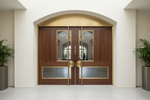
A swing door is a door that opens and closes by rotating on hinges attached to one side of the door frame. Unlike sliding or folding doors, swing doors move in an arc and require clearance to operate properly. This simple hinge-based design is what defines all swing doors, regardless of size or style.
Swing doors are the most common door type used in interior spaces because they are reliable, intuitive to use, and easy to integrate into standard layouts. Understanding the different types of swing doors helps you choose the right configuration for your space, traffic flow, and room layout.
Main Types of Swing Doors
Swing doors are typically categorized by the number of door panels and how they operate within an opening.
Single Swing Doors
Single swing doors consist of one door panel hinged on one side of the frame. This is the most common type of swing door used in residential interiors.
They are widely used for:
-
Bedrooms
-
Bathrooms
-
Home offices
-
Closets and utility rooms
Single swing doors open either inward or outward depending on layout and preference. Their simple operation and compatibility with standard door frames make them a practical and cost-effective choice.

Double Swing Doors
Double swing doors, also known as double-leaf doors, feature two hinged door panels that meet in the center of a wider opening.
These doors are often used to:
-
Connect living and dining areas
-
Create wider openings between rooms
-
Add symmetry and visual impact
Double swing doors allow for a more open feel and improved movement between spaces. They are commonly paired with glass panels to enhance light flow while maintaining separation when closed.
Bi-Directional (Double-Acting) Swing Doors
Bi-directional swing doors are designed to open in both directions using specialized hinges or pivot systems. These doors swing inward and outward and typically return to a closed position automatically.
Because of their movement flexibility, bi-directional swing doors are less common in homes and are mainly used in functional environments where quick, hands-free movement is needed. They are not typically chosen for standard interior residential use.

Swing Direction: Inward vs Outward
Swing doors can be configured to open inward or outward depending on room layout and clearance.
-
Inward-swinging doors are the most common for interior spaces and are easy to integrate into room layouts.
-
Outward-swinging doors are sometimes used when interior space is limited or when specific clearance requirements apply.
Choosing the correct swing direction ensures comfortable movement and avoids interference with furniture or walkways.
How to Choose the Right Type of Swing Door
When selecting a swing door, the most important factors are:
-
Opening width
-
Available clearance for the swing arc
-
How often the door will be used
Single swing doors work best for standard rooms and everyday use.
Double swing doors are ideal for larger openings and shared spaces.
Bi-directional swing doors are best suited for specialized applications rather than typical home interiors.

Frequently Asked Questions About Swing Doors
What is a swing door?
A swing door is a door that opens and closes on hinges, rotating in an arc rather than sliding or folding.
What are the main types of swing doors?
The main types of swing doors are single swing doors, double swing doors, and bi-directional swing doors.
Are swing doors better than sliding doors?
Swing doors offer better sealing and privacy, while sliding doors save space. The best option depends on room layout and usage.
Do swing doors need clearance?
Yes. Swing doors require enough space for the door panel to open fully without obstruction.
Are double swing doors practical for homes?
Yes. Double swing doors are commonly used in homes for wide openings and shared living spaces.
Conclusion
Swing doors remain one of the most practical and widely used interior door systems. By understanding what swing doors are and the different types available—single, double, and bi-directional—you can choose a door configuration that fits your space, layout, and daily use. Proper selection ensures smooth operation, comfortable movement, and long-term functionality.
What Is a Swing Door? Types of Swing Doors Explained

A swing door is a door that opens and closes by rotating on hinges attached to one side of the door frame. Unlike sliding or folding doors, swing doors move in an arc and require clearance to operate properly. This simple hinge-based design is what defines all swing doors, regardless of size or style.
Swing doors are the most common door type used in interior spaces because they are reliable, intuitive to use, and easy to integrate into standard layouts. Understanding the different types of swing doors helps you choose the right configuration for your space, traffic flow, and room layout.
Main Types of Swing Doors
Swing doors are typically categorized by the number of door panels and how they operate within an opening.
Single Swing Doors
Single swing doors consist of one door panel hinged on one side of the frame. This is the most common type of swing door used in residential interiors.
They are widely used for:
-
Bedrooms
-
Bathrooms
-
Home offices
-
Closets and utility rooms
Single swing doors open either inward or outward depending on layout and preference. Their simple operation and compatibility with standard door frames make them a practical and cost-effective choice.
Double Swing Doors
Double swing doors, also known as double-leaf doors, feature two hinged door panels that meet in the center of a wider opening.
These doors are often used to:
-
Connect living and dining areas
-
Create wider openings between rooms
-
Add symmetry and visual impact
Double swing doors allow for a more open feel and improved movement between spaces. They are commonly paired with glass panels to enhance light flow while maintaining separation when closed.
Bi-Directional (Double-Acting) Swing Doors
Bi-directional swing doors are designed to open in both directions using specialized hinges or pivot systems. These doors swing inward and outward and typically return to a closed position automatically.
Because of their movement flexibility, bi-directional swing doors are less common in homes and are mainly used in functional environments where quick, hands-free movement is needed. They are not typically chosen for standard interior residential use.
Swing Direction: Inward vs Outward
Swing doors can be configured to open inward or outward depending on room layout and clearance.
-
Inward-swinging doors are the most common for interior spaces and are easy to integrate into room layouts.
-
Outward-swinging doors are sometimes used when interior space is limited or when specific clearance requirements apply.
Choosing the correct swing direction ensures comfortable movement and avoids interference with furniture or walkways.
How to Choose the Right Type of Swing Door
When selecting a swing door, the most important factors are:
-
Opening width
-
Available clearance for the swing arc
-
How often the door will be used
Single swing doors work best for standard rooms and everyday use.
Double swing doors are ideal for larger openings and shared spaces.
Bi-directional swing doors are best suited for specialized applications rather than typical home interiors.
Frequently Asked Questions About Swing Doors
What is a swing door?
A swing door is a door that opens and closes on hinges, rotating in an arc rather than sliding or folding.
What are the main types of swing doors?
The main types of swing doors are single swing doors, double swing doors, and bi-directional swing doors.
Are swing doors better than sliding doors?
Swing doors offer better sealing and privacy, while sliding doors save space. The best option depends on room layout and usage.
Do swing doors need clearance?
Yes. Swing doors require enough space for the door panel to open fully without obstruction.
Are double swing doors practical for homes?
Yes. Double swing doors are commonly used in homes for wide openings and shared living spaces.
Conclusion
Swing doors remain one of the most practical and widely used interior door systems. By understanding what swing doors are and the different types available—single, double, and bi-directional—you can choose a door configuration that fits your space, layout, and daily use. Proper selection ensures smooth operation, comfortable movement, and long-term functionality.


