


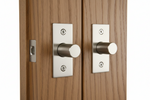
A flush bolt is one of those door hardware components that most homeowners do not think about until they are standing in a showroom or reading a product spec sheet and suddenly need to understand it. This guide explains what a flush bolt does, which doors use one, the three types available, and how to know whether your door project requires one.

What a Flush Bolt Does and Where It Mounts
The function of this door hardware component is straightforward: it locks the inactive door panel in place so the active panel can open and close independently, with the active door's latch engaging into the edge of the stationary inactive panel rather than into a fixed frame.
Active vs Inactive Leaf
In any double-door configuration, French doors, formal entry pairs, or double interior doors , one panel is the active leaf: the one you open and close for daily use. The other is the inactive leaf: the panel that stays fixed unless both doors need to be fully open. The inactive leaf needs its own locking mechanism to hold its position, and that mechanism is the flush bolt installed in the door edge. Without a flush bolt on the inactive leaf, the panel shifts with air pressure and vibration, which also prevents the active door's latch from aligning with its strike plate correctly.
Where the Flush Bolt Mounts
Flush bolts are installed on the edge of the inactive door panel, not the face. The body of the bolt is mortised into the door edge so it sits recessed within the door rather than protruding outward.
While exterior double doors typically require two flush bolts - one at the top of the door edge projecting into the frame head, and one at the bottom projecting into the floor strike - to withstand wind pressure and ensure security, interior double doors offer more flexibility. For interior installations, you can choose whether you want a top flush bolt only (which is often preferred for convenience as it avoids drilling into your flooring) or a top and bottom combination for maximum stability.
See more: Are French Doors Secure? Vulnerabilities, Modern Fixes and Honest Answers
Common Applications: French Doors, Entry Doors & Interior Pairs
Whether you are installing classic French doors, double entry doors, or interior double doors (such as for a formal dining room), they all share the exact same setup: one active door for daily passage and one inactive door that stays closed.
For all of these residential setups, a manual flush bolt is the standard and most reliable choice to secure the inactive panel. If the flush bolts become worn, loose, or aren't fully engaged, the inactive door will shift. This tiny misalignment prevents the active door's latch from catching properly, leaving you with a door that rattles, feels loose, or refuses to shut entirely.

Three Types of Flush Bolts
Door bolts of this type are available in three operating types, each suited to different frequency of use and whether manual engagement is acceptable. The right type for a residential door depends on how often the inactive leaf needs to be opened and whether automatic operation is required.
|
Type |
How It Works |
Best For |
Key Limitation |
|
Manual flush bolt |
Operator manually extends and retracts the bolt by flipping a small lever on the door edge |
Residential French doors, interior double doors, inactive leaves that are rarely opened |
Requires manual engagement each time; easy to forget to re-engage after the door is closed |
|
Automatic flush bolt |
Bolt retracts automatically when the active door opens; re-engages automatically when the active door closes |
High-traffic double doors, fire-rated commercial doors, entries requiring consistent latching |
More mechanically complex; higher cost; requires the active door to physically trigger retraction |
For most residential French door and double door applications, the manual type is the standard and appropriate choice. Automatic flush bolts are primarily specified for high-traffic commercial entries and fire-rated door assemblies where consistent latching without user action is required.
See more: Shed with French Doors: Which Use Case, Which Style, and How to Choose the Right Size
Flush Bolt vs Surface Bolt
The flush bolt type is mortised into the door edge so its body is recessed within the door, producing a clean result with no protrusion. A surface bolt, by contrast, is mounted directly on the face of the door and protrudes outward from the surface. Both perform the same function , locking a door in place by projecting into a strike , but differ in installation and appearance. Flush bolts require a mortise cut in the door edge and produce a less visible, more finished result. Surface bolts are easier to install and can be retrofitted to any door without cutting, but they are visible on the door face and protrude enough to catch on clothing or obstruct adjacent hardware on narrow door panels.
Browse French door and double door options at Doors and Beyond: Browse Interior French Door at Doors and Beyond
Do You Need a Flush Bolt? A Simple Decision Guide
Choosing whether to add a flush bolt to your double doors or French doors is actually very simple. It mostly depends on where the door is being installed and how much privacy you need:
1. For Bedrooms or Bathrooms (High Privacy) - Yes, you need it!
If your double doors lead into a bedroom, home office, or bathroom, you will definitely want a flush bolt. It secures one door leaf firmly in place so the other door can latch into it and lock properly, ensuring your privacy.
2. For Closets or Pantry Doors (Quick Access) - No, you don't need it.
If you are installing double doors for a closet, nobody wants to deal with a flush bolt. You will likely want to open both doors at the same time quickly, without having to reach up or down to unlock a fixed panel.
See more: How to Make French Doors More Secure: 6 Methods Ranked by Cost and Effectiveness
Which Rooms and Locations Benefit Most from Flush Bolts
This type of door hardware is relevant in any room where a double-door or multi-panel configuration is used, but some locations make better use of their specific advantages than others.

Living Room and Dining Room French Doors
French doors connecting a living room to a dining room or dining room to a patio are the single most common residential flush bolt application. The inactive leaf stays fixed during everyday use and is released only when a wider passage is needed, such as for furniture moving or entertaining. A manual bolt is appropriate here because the inactive leaf is operated infrequently and by an adult who can engage and disengage it deliberately.
Front Entry and Formal Entry Pairs
Double entry doors with one active and one inactive leaf use flush bolts to hold the inactive panel while the active door handles all daily foot traffic. This location benefits from a constant-latching or automatic flush bolt if children in the household are likely to open the inactive leaf without re-engaging the bolt, which compromises the door alignment and the active latch function.
Home Office and Bedroom Doors with Privacy Needs
Interior double doors used for home offices or primary bedrooms benefit from flush bolts because they allow the inactive leaf to remain securely anchored without requiring a second lockset. The flush bolt on the inactive leaf, combined with a lockset on the active leaf, provides both privacy and structural stability for the door pair. The manual type is standard for these interior applications.
What to Confirm with Your Door Manufacturer Before Ordering
Since flush bolts are rarely purchased separately and almost always come pre-installed with your doors, you don't need to worry about sourcing the hardware yourself. The responsibility of matching the bolt to the door's thickness lies with the manufacturer.
However, to avoid any installation headaches down the road, here is what you should double-check with your door supplier before placing an order:
- Ask for Factory Pre-Drilling (Prep): Especially for wooden doors, always request to have the bolt prep (the mortise and bore holes) cut directly by the manufacturer. Having this done in the factory ensures the cutouts are precise and perfectly aligned.
- Confirm Door Thickness Compatibility: Standard residential interior doors are typically 1 ⅜ or 1 3/4 inches thick, while exterior doors are 1 3/4 inches thick. Your manufacturer will automatically size the flush bolts to match, but confirming this ensures the hardware will sit perfectly flush with the door edge and won't be recessed too deeply.
Floor Strike Considerations
The bottom bolt of a paired installation projects into a strike embedded in the floor. On hardwood or tile floors, the strike requires a recess cut into the finished floor surface. This cut must be planned before the flooring is installed, as retrofitting a floor strike into finished hardwood or tile is significantly more disruptive and difficult. If the bottom floor strike is not desirable, some hardware systems offer a top-bolt-only option where the single bolt projects into the frame head, though this provides less stability than a two-bolt configuration.

Frequently Asked Questions (FAQs)
1. Do I need to buy flush bolts separately when ordering a new double door?
No. Flush bolts typically come pre-installed by the manufacturer. Since installation requires precise factory cutting, it is best to let the manufacturer handle the hardware.
2. What is the difference between a top-only flush bolt and a top-and-bottom setup for interior doors?
A top-only bolt is convenient and avoids drilling into your flooring. A top-and-bottom setup provides maximum stability, making the inactive door feel completely solid.
3. Can I use a flush bolt on a single-entry door?
No. Flush bolts are only for double doors to secure the inactive leaf. Single doors latch directly into the permanent wall frame, making flush bolts unnecessary.
4. What happens if my flush bolts are misaligned or worn out?
The inactive door will shift. This tiny misalignment prevents the main door's latch from catching properly, causing the doors to rattle or refuse to close.
5. Do I need a flush bolt for my double closet doors?
No. You want to open both closet doors quickly. Flush bolts require manual unlocking; roller latches or magnetic catches are much better and more convenient for the closet doors.
What Is a Flush Bolt for Doors? How It Works, Types, and When You Need One

A flush bolt is one of those door hardware components that most homeowners do not think about until they are standing in a showroom or reading a product spec sheet and suddenly need to understand it. This guide explains what a flush bolt does, which doors use one, the three types available, and how to know whether your door project requires one.
What a Flush Bolt Does and Where It Mounts
The function of this door hardware component is straightforward: it locks the inactive door panel in place so the active panel can open and close independently, with the active door's latch engaging into the edge of the stationary inactive panel rather than into a fixed frame.
Active vs Inactive Leaf
In any double-door configuration, French doors, formal entry pairs, or double interior doors , one panel is the active leaf: the one you open and close for daily use. The other is the inactive leaf: the panel that stays fixed unless both doors need to be fully open. The inactive leaf needs its own locking mechanism to hold its position, and that mechanism is the flush bolt installed in the door edge. Without a flush bolt on the inactive leaf, the panel shifts with air pressure and vibration, which also prevents the active door's latch from aligning with its strike plate correctly.
Where the Flush Bolt Mounts
Flush bolts are installed on the edge of the inactive door panel, not the face. The body of the bolt is mortised into the door edge so it sits recessed within the door rather than protruding outward.
While exterior double doors typically require two flush bolts - one at the top of the door edge projecting into the frame head, and one at the bottom projecting into the floor strike - to withstand wind pressure and ensure security, interior double doors offer more flexibility. For interior installations, you can choose whether you want a top flush bolt only (which is often preferred for convenience as it avoids drilling into your flooring) or a top and bottom combination for maximum stability.
See more: Are French Doors Secure? Vulnerabilities, Modern Fixes and Honest Answers
Common Applications: French Doors, Entry Doors & Interior Pairs
Whether you are installing classic French doors, double entry doors, or interior double doors (such as for a formal dining room), they all share the exact same setup: one active door for daily passage and one inactive door that stays closed.
For all of these residential setups, a manual flush bolt is the standard and most reliable choice to secure the inactive panel. If the flush bolts become worn, loose, or aren't fully engaged, the inactive door will shift. This tiny misalignment prevents the active door's latch from catching properly, leaving you with a door that rattles, feels loose, or refuses to shut entirely.
Three Types of Flush Bolts
Door bolts of this type are available in three operating types, each suited to different frequency of use and whether manual engagement is acceptable. The right type for a residential door depends on how often the inactive leaf needs to be opened and whether automatic operation is required.
|
Type |
How It Works |
Best For |
Key Limitation |
|
Manual flush bolt |
Operator manually extends and retracts the bolt by flipping a small lever on the door edge |
Residential French doors, interior double doors, inactive leaves that are rarely opened |
Requires manual engagement each time; easy to forget to re-engage after the door is closed |
|
Automatic flush bolt |
Bolt retracts automatically when the active door opens; re-engages automatically when the active door closes |
High-traffic double doors, fire-rated commercial doors, entries requiring consistent latching |
More mechanically complex; higher cost; requires the active door to physically trigger retraction |
For most residential French door and double door applications, the manual type is the standard and appropriate choice. Automatic flush bolts are primarily specified for high-traffic commercial entries and fire-rated door assemblies where consistent latching without user action is required.
See more: Shed with French Doors: Which Use Case, Which Style, and How to Choose the Right Size
Flush Bolt vs Surface Bolt
The flush bolt type is mortised into the door edge so its body is recessed within the door, producing a clean result with no protrusion. A surface bolt, by contrast, is mounted directly on the face of the door and protrudes outward from the surface. Both perform the same function , locking a door in place by projecting into a strike , but differ in installation and appearance. Flush bolts require a mortise cut in the door edge and produce a less visible, more finished result. Surface bolts are easier to install and can be retrofitted to any door without cutting, but they are visible on the door face and protrude enough to catch on clothing or obstruct adjacent hardware on narrow door panels.
Browse French door and double door options at Doors and Beyond: Browse Interior French Door at Doors and Beyond
Do You Need a Flush Bolt? A Simple Decision Guide
Choosing whether to add a flush bolt to your double doors or French doors is actually very simple. It mostly depends on where the door is being installed and how much privacy you need:
1. For Bedrooms or Bathrooms (High Privacy) - Yes, you need it!
If your double doors lead into a bedroom, home office, or bathroom, you will definitely want a flush bolt. It secures one door leaf firmly in place so the other door can latch into it and lock properly, ensuring your privacy.
2. For Closets or Pantry Doors (Quick Access) - No, you don't need it.
If you are installing double doors for a closet, nobody wants to deal with a flush bolt. You will likely want to open both doors at the same time quickly, without having to reach up or down to unlock a fixed panel.
See more: How to Make French Doors More Secure: 6 Methods Ranked by Cost and Effectiveness
Which Rooms and Locations Benefit Most from Flush Bolts
This type of door hardware is relevant in any room where a double-door or multi-panel configuration is used, but some locations make better use of their specific advantages than others.
Living Room and Dining Room French Doors
French doors connecting a living room to a dining room or dining room to a patio are the single most common residential flush bolt application. The inactive leaf stays fixed during everyday use and is released only when a wider passage is needed, such as for furniture moving or entertaining. A manual bolt is appropriate here because the inactive leaf is operated infrequently and by an adult who can engage and disengage it deliberately.
Front Entry and Formal Entry Pairs
Double entry doors with one active and one inactive leaf use flush bolts to hold the inactive panel while the active door handles all daily foot traffic. This location benefits from a constant-latching or automatic flush bolt if children in the household are likely to open the inactive leaf without re-engaging the bolt, which compromises the door alignment and the active latch function.
Home Office and Bedroom Doors with Privacy Needs
Interior double doors used for home offices or primary bedrooms benefit from flush bolts because they allow the inactive leaf to remain securely anchored without requiring a second lockset. The flush bolt on the inactive leaf, combined with a lockset on the active leaf, provides both privacy and structural stability for the door pair. The manual type is standard for these interior applications.
What to Confirm with Your Door Manufacturer Before Ordering
Since flush bolts are rarely purchased separately and almost always come pre-installed with your doors, you don't need to worry about sourcing the hardware yourself. The responsibility of matching the bolt to the door's thickness lies with the manufacturer.
However, to avoid any installation headaches down the road, here is what you should double-check with your door supplier before placing an order:
- Ask for Factory Pre-Drilling (Prep): Especially for wooden doors, always request to have the bolt prep (the mortise and bore holes) cut directly by the manufacturer. Having this done in the factory ensures the cutouts are precise and perfectly aligned.
- Confirm Door Thickness Compatibility: Standard residential interior doors are typically 1 ⅜ or 1 3/4 inches thick, while exterior doors are 1 3/4 inches thick. Your manufacturer will automatically size the flush bolts to match, but confirming this ensures the hardware will sit perfectly flush with the door edge and won't be recessed too deeply.
Floor Strike Considerations
The bottom bolt of a paired installation projects into a strike embedded in the floor. On hardwood or tile floors, the strike requires a recess cut into the finished floor surface. This cut must be planned before the flooring is installed, as retrofitting a floor strike into finished hardwood or tile is significantly more disruptive and difficult. If the bottom floor strike is not desirable, some hardware systems offer a top-bolt-only option where the single bolt projects into the frame head, though this provides less stability than a two-bolt configuration.
Frequently Asked Questions (FAQs)
1. Do I need to buy flush bolts separately when ordering a new double door?
No. Flush bolts typically come pre-installed by the manufacturer. Since installation requires precise factory cutting, it is best to let the manufacturer handle the hardware.
2. What is the difference between a top-only flush bolt and a top-and-bottom setup for interior doors?
A top-only bolt is convenient and avoids drilling into your flooring. A top-and-bottom setup provides maximum stability, making the inactive door feel completely solid.
3. Can I use a flush bolt on a single-entry door?
No. Flush bolts are only for double doors to secure the inactive leaf. Single doors latch directly into the permanent wall frame, making flush bolts unnecessary.
4. What happens if my flush bolts are misaligned or worn out?
The inactive door will shift. This tiny misalignment prevents the main door's latch from catching properly, causing the doors to rattle or refuse to close.
5. Do I need a flush bolt for my double closet doors?
No. You want to open both closet doors quickly. Flush bolts require manual unlocking; roller latches or magnetic catches are much better and more convenient for the closet doors.


