


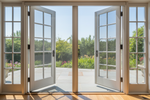
French doors are designed for openness, and screens make that openness practical. Whether you want cross-ventilation on a warm afternoon without letting in mosquitoes, or you want to leave the doors open during a summer gathering, there is a screen solution that works for almost every French door configuration. This guide covers the four main screen options, compares them side by side, and explains which one suits different door types and budgets.
Quick Answer
Yes, French doors can have screens. The four main options are retractable screens, magnetic mesh screens, hinged screen doors, and sliding screens. Retractable screens are the most popular choice because they disappear when not in use and work with both inswing and outswing French doors. Magnetic screens are the most affordable option and require no permanent installation.
The 4 Screen Options for French Doors , Side by Side
Each screen type works differently and suits a different combination of door configuration, budget, and how important it is that the screen stays hidden when not in use. The table below puts all four options side by side before the sections that follow explain each one in more detail.
|
Screen Type |
DIY Install |
Best For |
Main Limitation |
|
Retractable |
No , professional recommended |
All door types; highest aesthetics when retracted |
Highest cost; needs professional install |
|
Magnetic mesh |
Yes , no tools needed |
Renters; budget installs; seasonal / temporary use |
Wind disrupts seal; wears quickly with heavy use |
|
Hinged screen |
Moderate |
Inswing French doors only |
Incompatible with outswing doors; always visible |
|
Sliding screen |
Moderate |
Sliding-style French doors |
Not suitable for swinging door pairs |
Retractable screens are the premium choice that work across almost all French door configurations and disappear completely when not needed. Magnetic mesh screens are the fastest and cheapest solution but have meaningful limitations in wind and durability. Hinged screens are traditional and work well but only on the subset of French doors that open inward. Sliding screens are purpose-built for sliding-style French doors and not relevant for swinging pairs.
See more: Curtains on French Doors: Ideas by Room, Style and Mounting Method

Retractable Screens , The Most Versatile Choice
Retractable screens are the most widely recommended option for French doors because they solve the core challenge: both door panels swing, and a fixed screen would block at least one of them. Retractable screens work around this by being a fully independent system from the door itself.
How They Work
Two separate screen panels are housed in slim vertical casings mounted on each side of the door frame. When needed, each panel glides along a top track and meets in the center where a full-length magnet holds them together. When not in use, both panels retract entirely into the housing, leaving the French doors fully visible and unobstructed. This design works regardless of whether the French doors swing inward or outward because the screen never contacts the door panels themselves.
Size and Installation
Retractable screen systems for French doors can accommodate openings up to 128 inches wide (64 inches per panel) and up to 108 inches tall, covering virtually all standard and oversized French door installations. Professional installation is typically recommended to ensure the track is level, the housing is properly mounted, and the magnetic center seal aligns correctly. Many manufacturers offer professionally trained installers and limited lifetime warranties on the mechanism. Cost varies by opening size, mesh type, and frame color, with most professionally installed systems running $300 to $800 or more for a standard double-door opening.

Magnetic Screens , The Budget Retrofit
Magnetic mesh screens are the most affordable and quickest-to-install option for French doors and are particularly popular among renters and homeowners who want a seasonal solution they can remove and store.
What They Do Well
Two mesh panels attach to the door frame using hook-and-loop tape or adhesive strips. The panels hang with their center edges lined with magnetic strips that close automatically after someone walks through. Installation takes under 30 minutes with no tools and no permanent modifications to the door frame. At $30 to $120, they cost a fraction of any other option and can be packed away at the end of summer.
Where They Fall Short
Wind causes the panels to separate and billow inward, which makes them ineffective for insect control in breezy locations and disruptive to look at. The magnetic center seal weakens with repeated use, and most magnetic screen products last one to two seasons before they need replacing. They are not appropriate for high-traffic exterior doors, and the mesh panels remain visible at all times even when the door is closed, which does not suit premium French door installations where aesthetics matter. For a permanent outdoor living space, retractable or hinged screens will outlast magnetic mesh by a significant margin.
See more: Are French Doors More Secure Than Sliding Doors? A Full Comparison
Exploring French door options for your home? Browse the full collection at Doors and Beyond: Shop Interior French Doors at Doors and Beyond

Hinged Screens , Traditional but Limited to Inswing Doors
Hinged screen doors are the traditional solution and the one most homeowners picture first, but a critical compatibility issue eliminates them as an option for most modern French door installations in the US.
A hinged screen door is mounted outside the French door frame and swings inward toward the living space. For this to work without conflicting with the French doors, the French doors themselves must open outward. Most new French patio doors installed in US homes today are outswing, which means the French door already opens outward , and the hinged screen door would then have to swing inward into the interior, conflicting with furniture and reducing usable floor area. For older homes with inswing French doors, a hinged screen door remains a practical and lower-cost alternative to retractable screens. For any outswing installation, hinged screens are not a workable option.
See more: Should Patio Doors Swing In or Out? What Homeowners Need to Know

Which Screen Works for Your Door Configuration
The right screen depends as much on how your French doors open as on budget or aesthetics. This matrix matches the four screen types to the four common door configurations.
|
Door Configuration |
Retractable |
Magnetic Mesh |
Hinged Screen Door |
Sliding Screen |
|
Inswing French doors |
Yes , works well |
Yes , budget option |
Yes , best traditional fit |
No |
|
Outswing French doors |
Yes , best option available |
Yes , budget option |
No , incompatible |
No |
|
Double-panel swinging doors |
Yes , dual-panel system needed |
Yes , center-meeting |
Not practical |
No |
|
Sliding French doors |
Possible but not ideal |
Possible |
No |
Yes , natural fit |
Retractable screens are the only option that works well across all four door configurations, which is why they are consistently recommended for swinging French door pairs. Hinged screens are eliminated from outswing doors and most modern French patio door installations fall into that category. Sliding screens are the natural fit for sliding French door variants but serve no role in the swinging door category.
Final Thoughts
French doors can have screens, and the right choice comes down to three factors: how the doors swing, how much the screen's appearance matters when not in use, and budget. Retractable screens work for virtually every French door configuration and disappear when not needed. Magnetic screens serve the budget end for temporary use. Hinged screens suit the narrower category of inswing doors only.
See more: French Doors vs Double Doors: Key Differences and How to Choose
Can French Doors Have Screens? Yes , Here Are Your 4 Options, Compared

French doors are designed for openness, and screens make that openness practical. Whether you want cross-ventilation on a warm afternoon without letting in mosquitoes, or you want to leave the doors open during a summer gathering, there is a screen solution that works for almost every French door configuration. This guide covers the four main screen options, compares them side by side, and explains which one suits different door types and budgets.
Quick Answer
Yes, French doors can have screens. The four main options are retractable screens, magnetic mesh screens, hinged screen doors, and sliding screens. Retractable screens are the most popular choice because they disappear when not in use and work with both inswing and outswing French doors. Magnetic screens are the most affordable option and require no permanent installation.
The 4 Screen Options for French Doors , Side by Side
Each screen type works differently and suits a different combination of door configuration, budget, and how important it is that the screen stays hidden when not in use. The table below puts all four options side by side before the sections that follow explain each one in more detail.
|
Screen Type |
DIY Install |
Best For |
Main Limitation |
|
Retractable |
No , professional recommended |
All door types; highest aesthetics when retracted |
Highest cost; needs professional install |
|
Magnetic mesh |
Yes , no tools needed |
Renters; budget installs; seasonal / temporary use |
Wind disrupts seal; wears quickly with heavy use |
|
Hinged screen |
Moderate |
Inswing French doors only |
Incompatible with outswing doors; always visible |
|
Sliding screen |
Moderate |
Sliding-style French doors |
Not suitable for swinging door pairs |
Retractable screens are the premium choice that work across almost all French door configurations and disappear completely when not needed. Magnetic mesh screens are the fastest and cheapest solution but have meaningful limitations in wind and durability. Hinged screens are traditional and work well but only on the subset of French doors that open inward. Sliding screens are purpose-built for sliding-style French doors and not relevant for swinging pairs.
See more: Curtains on French Doors: Ideas by Room, Style and Mounting Method
Retractable Screens , The Most Versatile Choice
Retractable screens are the most widely recommended option for French doors because they solve the core challenge: both door panels swing, and a fixed screen would block at least one of them. Retractable screens work around this by being a fully independent system from the door itself.
How They Work
Two separate screen panels are housed in slim vertical casings mounted on each side of the door frame. When needed, each panel glides along a top track and meets in the center where a full-length magnet holds them together. When not in use, both panels retract entirely into the housing, leaving the French doors fully visible and unobstructed. This design works regardless of whether the French doors swing inward or outward because the screen never contacts the door panels themselves.
Size and Installation
Retractable screen systems for French doors can accommodate openings up to 128 inches wide (64 inches per panel) and up to 108 inches tall, covering virtually all standard and oversized French door installations. Professional installation is typically recommended to ensure the track is level, the housing is properly mounted, and the magnetic center seal aligns correctly. Many manufacturers offer professionally trained installers and limited lifetime warranties on the mechanism. Cost varies by opening size, mesh type, and frame color, with most professionally installed systems running $300 to $800 or more for a standard double-door opening.
Magnetic Screens , The Budget Retrofit
Magnetic mesh screens are the most affordable and quickest-to-install option for French doors and are particularly popular among renters and homeowners who want a seasonal solution they can remove and store.
What They Do Well
Two mesh panels attach to the door frame using hook-and-loop tape or adhesive strips. The panels hang with their center edges lined with magnetic strips that close automatically after someone walks through. Installation takes under 30 minutes with no tools and no permanent modifications to the door frame. At $30 to $120, they cost a fraction of any other option and can be packed away at the end of summer.
Where They Fall Short
Wind causes the panels to separate and billow inward, which makes them ineffective for insect control in breezy locations and disruptive to look at. The magnetic center seal weakens with repeated use, and most magnetic screen products last one to two seasons before they need replacing. They are not appropriate for high-traffic exterior doors, and the mesh panels remain visible at all times even when the door is closed, which does not suit premium French door installations where aesthetics matter. For a permanent outdoor living space, retractable or hinged screens will outlast magnetic mesh by a significant margin.
See more: Are French Doors More Secure Than Sliding Doors? A Full Comparison
Exploring French door options for your home? Browse the full collection at Doors and Beyond: Shop Interior French Doors at Doors and Beyond
Hinged Screens , Traditional but Limited to Inswing Doors
Hinged screen doors are the traditional solution and the one most homeowners picture first, but a critical compatibility issue eliminates them as an option for most modern French door installations in the US.
A hinged screen door is mounted outside the French door frame and swings inward toward the living space. For this to work without conflicting with the French doors, the French doors themselves must open outward. Most new French patio doors installed in US homes today are outswing, which means the French door already opens outward , and the hinged screen door would then have to swing inward into the interior, conflicting with furniture and reducing usable floor area. For older homes with inswing French doors, a hinged screen door remains a practical and lower-cost alternative to retractable screens. For any outswing installation, hinged screens are not a workable option.
See more: Should Patio Doors Swing In or Out? What Homeowners Need to Know
Which Screen Works for Your Door Configuration
The right screen depends as much on how your French doors open as on budget or aesthetics. This matrix matches the four screen types to the four common door configurations.
|
Door Configuration |
Retractable |
Magnetic Mesh |
Hinged Screen Door |
Sliding Screen |
|
Inswing French doors |
Yes , works well |
Yes , budget option |
Yes , best traditional fit |
No |
|
Outswing French doors |
Yes , best option available |
Yes , budget option |
No , incompatible |
No |
|
Double-panel swinging doors |
Yes , dual-panel system needed |
Yes , center-meeting |
Not practical |
No |
|
Sliding French doors |
Possible but not ideal |
Possible |
No |
Yes , natural fit |
Retractable screens are the only option that works well across all four door configurations, which is why they are consistently recommended for swinging French door pairs. Hinged screens are eliminated from outswing doors and most modern French patio door installations fall into that category. Sliding screens are the natural fit for sliding French door variants but serve no role in the swinging door category.
Final Thoughts
French doors can have screens, and the right choice comes down to three factors: how the doors swing, how much the screen's appearance matters when not in use, and budget. Retractable screens work for virtually every French door configuration and disappear when not needed. Magnetic screens serve the budget end for temporary use. Hinged screens suit the narrower category of inswing doors only.
See more: French Doors vs Double Doors: Key Differences and How to Choose


