


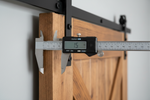
Barn doors may look simple, but thickness plays a major role in how they perform. Door thickness affects hardware compatibility, durability, privacy, and even how stable the door feels when sliding.
If you're asking how thick are barn doors, the short answer is:
Most standard interior barn doors are 1⅜ inches or 1¾ inches thick, with 1¾ inches being the most common and versatile choice.
Custom or specialty doors can be 2 inches or thicker, but that’s less typical for residential interiors.
Here’s what those thickness options mean — and how to choose the right one.
Standard Barn Door Thickness Options
1⅜-Inch Barn Doors
A 1⅜-inch door is the traditional interior door thickness and is widely available in ready-made barn door kits.
These doors are:
-
Lighter in weight
-
Easier to install
-
Compatible with most standard hardware
-
Ideal for low-privacy spaces
They’re commonly used for:
-
Closets
-
Pantries
-
Decorative room dividers
-
Secondary bedrooms
However, thinner doors feel less substantial and offer minimal sound reduction.
1¾-Inch Barn Doors (Most Recommended)
A 1¾-inch barn door is the most balanced and widely recommended thickness for interior use.
This thickness offers:
-
Better durability
-
More solid feel
-
Improved sound dampening
-
Greater hardware flexibility
Most high-quality interior doors — including solid-core and premium engineered-core options — are 1¾ inches thick.
For:
-
Bedrooms
-
Home offices
-
Primary living spaces
1¾ inches is typically the safest and most versatile choice.

2-Inch and Thicker Barn Doors
Doors 2 inches or thicker are usually custom or specialty pieces.
They are often:
-
Solid hardwood
-
Statement architectural doors
-
Industrial or rustic-style designs
While thicker doors feel substantial and may offer slightly better acoustic performance, they also:
-
Require heavy-duty hardware
-
Add significant weight
-
May exceed standard hardware limits
Unless you’re designing a custom statement piece, thicker is not always better.
How Thickness Affects Barn Door Hardware
Door thickness directly impacts which hardware systems you can use.
Track and Roller Compatibility
Barn door hardware is engineered to support specific thickness ranges.
If the door is too thick:
-
Roller bolts may be too short
-
The door may sit off-center
-
Sliding motion may become uneven
If the door is too thin:
-
Rollers may not seat securely
-
Spacers may be required
-
The door can feel unstable
Before ordering, always confirm that your hardware system supports your selected door thickness.
Most standard interior hardware is designed for 1⅜" to 1¾" doors.

Handles and Lock Options
Thickness also affects which handles and locks can be installed.
-
Thin doors limit recessed or mortise hardware.
-
1¾-inch doors support most barn-door-specific locks and edge pulls.
-
Thick doors may require longer fasteners or custom components.
If you plan to install a privacy latch or recessed pull, 1¾ inches provides the most flexibility.

Does Barn Door Thickness Improve Sound & Privacy?
Many homeowners ask whether thicker barn doors block more sound.
The answer is: yes — but only to a point.
Thicker doors increase mass, which helps reduce sound transmission through the panel itself. Solid-core doors perform better than hollow-core doors at the same thickness.
However, barn doors are not fully sealed like hinged doors. Gaps at the top, bottom, and sides still allow sound to pass.

What thickness can do:
-
Reduce vibration
-
Improve mid-range sound dampening
-
Improve perceived privacy
-
Make the door feel more substantial
For better acoustic performance, thickness should be combined with:
-
Solid-core construction
-
Proper installation
-
Optional edge seals
If privacy matters, a 1¾-inch solid-core door is a clear upgrade over a thin decorative panel.
Interior vs Exterior Barn Door Thickness
For interior residential use, 1⅜" to 1¾" is standard.
Exterior or semi-exterior barn doors require greater thickness due to:
-
Weather exposure
-
Structural demands
-
Insulation needs
-
Sealing requirements
Exterior barn doors are typically:
-
1¾" to 2½" thick
-
Solid wood or insulated core
-
Installed with heavy-duty hardware
For most homeowners installing sliding doors inside a climate-controlled space, exterior-level thickness is unnecessary.

How to Choose the Right Thickness
When deciding how thick your barn door should be, consider:
1. Intended Use
-
Decorative divider → 1⅜" may be sufficient
-
Bedroom or office → 1¾" recommended
2. Door Construction
A thick hollow-core door may perform worse than a thinner solid-core door. Construction matters as much as thickness.
3. Hardware Limits
Always verify hardware compatibility before choosing thicker doors.
4. Privacy Expectations
Thicker, solid-core doors improve privacy and stability.
5. Aesthetic Balance
Thin doors suit modern minimal interiors.
Thicker doors complement rustic, industrial, or statement designs.
Recommended Thickness Summary
For most interior residential applications:
-
1⅜" → Light-duty, decorative use
-
1¾" → Best overall choice (recommended standard)
-
2"+ → Custom or heavy-duty applications
If unsure, 1¾ inches offers the best balance of durability, compatibility, and performance.
Frequently Asked Questions
What is the standard thickness of a barn door?
Most interior barn doors are 1⅜ inches or 1¾ inches thick. The most common and recommended thickness is 1¾ inches.
Is a thicker barn door better?
Thicker doors feel more solid and can improve sound dampening, but they require compatible hardware. For most interiors, 1¾ inches is ideal.
Can I use standard hardware with a 2-inch door?
Not always. Many standard hardware kits are designed for doors up to 1¾ inches thick. Always check manufacturer specifications.
Does thickness make a barn door soundproof?
No. Thickness improves sound reduction slightly, but barn doors are not fully sealed and cannot provide complete soundproofing.
Are exterior barn doors thicker?
Yes. Exterior barn doors are typically thicker (1¾" to 2½") to withstand weather and structural stress.
Final Thoughts
When asking how thick are barn doors, the right answer depends on function, hardware, and performance, not just appearance.
For most residential interiors, a 1¾-inch solid or engineered-core barn door offers the best combination of strength, hardware compatibility, and privacy.
Choosing the correct thickness ensures your door:
-
Slides smoothly
-
Feels stable
-
Supports proper hardware
-
Performs as expected long term
Thickness isn’t just a measurement , it’s part of the entire door system. Choose it carefully, and the rest of the installation becomes much easier.
How Thick Are Barn Doors? Standard Sizes and What to Choose

Barn doors may look simple, but thickness plays a major role in how they perform. Door thickness affects hardware compatibility, durability, privacy, and even how stable the door feels when sliding.
If you're asking how thick are barn doors, the short answer is:
Most standard interior barn doors are 1⅜ inches or 1¾ inches thick, with 1¾ inches being the most common and versatile choice.
Custom or specialty doors can be 2 inches or thicker, but that’s less typical for residential interiors.
Here’s what those thickness options mean — and how to choose the right one.
Standard Barn Door Thickness Options
1⅜-Inch Barn Doors
A 1⅜-inch door is the traditional interior door thickness and is widely available in ready-made barn door kits.
These doors are:
-
Lighter in weight
-
Easier to install
-
Compatible with most standard hardware
-
Ideal for low-privacy spaces
They’re commonly used for:
-
Closets
-
Pantries
-
Decorative room dividers
-
Secondary bedrooms
However, thinner doors feel less substantial and offer minimal sound reduction.
1¾-Inch Barn Doors (Most Recommended)
A 1¾-inch barn door is the most balanced and widely recommended thickness for interior use.
This thickness offers:
-
Better durability
-
More solid feel
-
Improved sound dampening
-
Greater hardware flexibility
Most high-quality interior doors — including solid-core and premium engineered-core options — are 1¾ inches thick.
For:
-
Bedrooms
-
Home offices
-
Primary living spaces
1¾ inches is typically the safest and most versatile choice.
2-Inch and Thicker Barn Doors
Doors 2 inches or thicker are usually custom or specialty pieces.
They are often:
-
Solid hardwood
-
Statement architectural doors
-
Industrial or rustic-style designs
While thicker doors feel substantial and may offer slightly better acoustic performance, they also:
-
Require heavy-duty hardware
-
Add significant weight
-
May exceed standard hardware limits
Unless you’re designing a custom statement piece, thicker is not always better.
How Thickness Affects Barn Door Hardware
Door thickness directly impacts which hardware systems you can use.
Track and Roller Compatibility
Barn door hardware is engineered to support specific thickness ranges.
If the door is too thick:
-
Roller bolts may be too short
-
The door may sit off-center
-
Sliding motion may become uneven
If the door is too thin:
-
Rollers may not seat securely
-
Spacers may be required
-
The door can feel unstable
Before ordering, always confirm that your hardware system supports your selected door thickness.
Most standard interior hardware is designed for 1⅜" to 1¾" doors.
Handles and Lock Options
Thickness also affects which handles and locks can be installed.
-
Thin doors limit recessed or mortise hardware.
-
1¾-inch doors support most barn-door-specific locks and edge pulls.
-
Thick doors may require longer fasteners or custom components.
If you plan to install a privacy latch or recessed pull, 1¾ inches provides the most flexibility.
Does Barn Door Thickness Improve Sound & Privacy?
Many homeowners ask whether thicker barn doors block more sound.
The answer is: yes — but only to a point.
Thicker doors increase mass, which helps reduce sound transmission through the panel itself. Solid-core doors perform better than hollow-core doors at the same thickness.
However, barn doors are not fully sealed like hinged doors. Gaps at the top, bottom, and sides still allow sound to pass.
What thickness can do:
-
Reduce vibration
-
Improve mid-range sound dampening
-
Improve perceived privacy
-
Make the door feel more substantial
For better acoustic performance, thickness should be combined with:
-
Solid-core construction
-
Proper installation
-
Optional edge seals
If privacy matters, a 1¾-inch solid-core door is a clear upgrade over a thin decorative panel.
Interior vs Exterior Barn Door Thickness
For interior residential use, 1⅜" to 1¾" is standard.
Exterior or semi-exterior barn doors require greater thickness due to:
-
Weather exposure
-
Structural demands
-
Insulation needs
-
Sealing requirements
Exterior barn doors are typically:
-
1¾" to 2½" thick
-
Solid wood or insulated core
-
Installed with heavy-duty hardware
For most homeowners installing sliding doors inside a climate-controlled space, exterior-level thickness is unnecessary.
How to Choose the Right Thickness
When deciding how thick your barn door should be, consider:
1. Intended Use
-
Decorative divider → 1⅜" may be sufficient
-
Bedroom or office → 1¾" recommended
2. Door Construction
A thick hollow-core door may perform worse than a thinner solid-core door. Construction matters as much as thickness.
3. Hardware Limits
Always verify hardware compatibility before choosing thicker doors.
4. Privacy Expectations
Thicker, solid-core doors improve privacy and stability.
5. Aesthetic Balance
Thin doors suit modern minimal interiors.
Thicker doors complement rustic, industrial, or statement designs.
Recommended Thickness Summary
For most interior residential applications:
-
1⅜" → Light-duty, decorative use
-
1¾" → Best overall choice (recommended standard)
-
2"+ → Custom or heavy-duty applications
If unsure, 1¾ inches offers the best balance of durability, compatibility, and performance.
Frequently Asked Questions
What is the standard thickness of a barn door?
Most interior barn doors are 1⅜ inches or 1¾ inches thick. The most common and recommended thickness is 1¾ inches.
Is a thicker barn door better?
Thicker doors feel more solid and can improve sound dampening, but they require compatible hardware. For most interiors, 1¾ inches is ideal.
Can I use standard hardware with a 2-inch door?
Not always. Many standard hardware kits are designed for doors up to 1¾ inches thick. Always check manufacturer specifications.
Does thickness make a barn door soundproof?
No. Thickness improves sound reduction slightly, but barn doors are not fully sealed and cannot provide complete soundproofing.
Are exterior barn doors thicker?
Yes. Exterior barn doors are typically thicker (1¾" to 2½") to withstand weather and structural stress.
Final Thoughts
When asking how thick are barn doors, the right answer depends on function, hardware, and performance, not just appearance.
For most residential interiors, a 1¾-inch solid or engineered-core barn door offers the best combination of strength, hardware compatibility, and privacy.
Choosing the correct thickness ensures your door:
-
Slides smoothly
-
Feels stable
-
Supports proper hardware
-
Performs as expected long term
Thickness isn’t just a measurement , it’s part of the entire door system. Choose it carefully, and the rest of the installation becomes much easier.


