


Interior door thickness is often overlooked, yet it plays a major role in how a door feels, performs, and lasts over time. While style and finish usually get the most attention, thickness directly affects sound control, structural stability, and overall quality—especially in premium and European interior doors.
This guide explains standard interior door thickness options and why thicker, well-engineered doors are often preferred in high-end homes.
What Interior Door Thickness Really Means
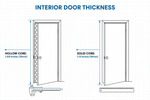
Interior door thickness refers to the depth of the door slab from front to back, excluding hardware. While it may seem like a minor measurement, thickness has a noticeable impact on how a door functions within a frame and how it performs day to day.
Thicker doors generally:
-
Feel more solid and substantial
-
Resist warping and flexing
-
Reduce sound transfer between rooms
-
Support higher-quality hardware
In premium interiors, thickness is a key contributor to the overall sense of quality when opening and closing a door.

Standard Interior Door Thickness in U.S. Homes
1⅜ Inches – The Residential Standard
Most interior doors in U.S. homes are 1⅜ inches thick. This size is commonly used for hollow-core and basic solid-core doors and works well for closets, hallways, and low-traffic areas.
While functional, thinner doors provide limited sound insulation and a lighter feel unless paired with a dense solid core.
1¾ Inches – Premium & Solid Core Doors
Thicker interior doors—typically 1¾ inches—are widely used in higher-end residential construction. This thickness is especially common in solid core and European-style interior doors.
Benefits include:
-
Noticeably better sound reduction
-
Increased rigidity and long-term stability
-
A heavier, more refined feel
-
Improved support for premium hardware
For bedrooms, home offices, and main living spaces, thicker doors deliver a clear upgrade in comfort and performance.

Why Premium & European Interior Doors Are Often Thicker
European interior doors are engineered differently from standard builder-grade doors. Rather than relying on hollow construction, they typically use dense engineered cores combined with high-performance laminated finishes such as CPL laminate.
This construction allows doors to remain straight, stable, and visually consistent—even at greater thicknesses—while offering excellent resistance to moisture, wear, and everyday use.
Thicker European doors are designed to:
-
Enhance acoustic performance
-
Maintain alignment over time
-
Deliver a more substantial, high-quality feel
-
Support durable laminated surfaces without cracking or peeling
Thickness, in this context, is not about excess material—it’s about precision engineering and long-term performance.
How Thickness Affects Sound & Privacy
Door thickness plays an important role in reducing everyday noise between rooms. While thickness alone does not determine full soundproofing, increasing from a standard thin door to a thicker solid or engineered core noticeably improves sound control.
When combined with:
-
Solid or engineered cores
-
Tight-fitting frames
-
Quality seals and hardware
Thicker interior doors significantly improve privacy in bedrooms, offices, and shared living spaces.

Thickness, Finish & Durability
Thicker doors also perform better when paired with durable finishes. High-performance laminated surfaces—commonly used on European interior doors—maintain their appearance far better than painted surfaces, especially on heavier door slabs.
Laminated doors:
-
Resist scuffs and scratches
-
Maintain color consistency
-
Require minimal maintenance
-
Perform well in high-traffic areas
This makes thicker laminated doors ideal for modern homes where both design and durability matter.
Choosing the Right Door Thickness for Your Home
Bedrooms & home offices: Thicker solid or engineered doors for sound and privacy
Living areas: Thicker doors enhance quality and visual presence
Closets & utility rooms: Standard thickness is usually sufficient
Modern & luxury interiors: Thicker doors better support premium finishes and hardware
Selecting the right thickness ensures your interior doors perform as well as they look.
Frequently Asked Questions About Interior Door Thickness
What is the standard thickness for interior doors in the U.S.?
The most common interior door thickness in the U.S. is 1⅜ inches. This size is widely used for residential hollow-core and basic solid-core doors.
Is a 1¾-inch interior door better than a 1⅜-inch door?
Yes, in many cases. A 1¾-inch interior door offers better sound control, greater stability, and a more substantial feel, making it ideal for bedrooms, offices, and high-end interiors.
Do thicker interior doors reduce noise?
Thicker doors help reduce sound transfer, especially when combined with solid or engineered cores, proper framing, and quality seals. While not fully soundproof, they significantly improve privacy.
Are European interior doors thicker than standard doors?
Many European interior doors are designed at greater thicknesses and use engineered cores with durable laminated finishes, resulting in improved performance, stability, and longevity.
Does door thickness affect hardware options?
Yes. Thicker doors better support premium hardware, including heavier handles, concealed hinges, and magnetic latches, which are commonly used in luxury interiors.
Final Thoughts
Interior door thickness is a key factor in comfort, durability, and perceived quality. While standard thickness doors meet basic needs, thicker interior doors—especially those built with European-engineered cores and durable laminated finishes—offer superior sound control, stability, and long-term performance.
Choosing the right thickness isn’t just a technical decision; it’s an investment in how your home feels and functions every day.
Interior Door Thickness Explained: Why It Matters for Performance & Sound

Interior door thickness is often overlooked, yet it plays a major role in how a door feels, performs, and lasts over time. While style and finish usually get the most attention, thickness directly affects sound control, structural stability, and overall quality—especially in premium and European interior doors.
This guide explains standard interior door thickness options and why thicker, well-engineered doors are often preferred in high-end homes.
What Interior Door Thickness Really Means
Interior door thickness refers to the depth of the door slab from front to back, excluding hardware. While it may seem like a minor measurement, thickness has a noticeable impact on how a door functions within a frame and how it performs day to day.
Thicker doors generally:
-
Feel more solid and substantial
-
Resist warping and flexing
-
Reduce sound transfer between rooms
-
Support higher-quality hardware
In premium interiors, thickness is a key contributor to the overall sense of quality when opening and closing a door.
Standard Interior Door Thickness in U.S. Homes
1⅜ Inches – The Residential Standard
Most interior doors in U.S. homes are 1⅜ inches thick. This size is commonly used for hollow-core and basic solid-core doors and works well for closets, hallways, and low-traffic areas.
While functional, thinner doors provide limited sound insulation and a lighter feel unless paired with a dense solid core.
1¾ Inches – Premium & Solid Core Doors
Thicker interior doors—typically 1¾ inches—are widely used in higher-end residential construction. This thickness is especially common in solid core and European-style interior doors.
Benefits include:
-
Noticeably better sound reduction
-
Increased rigidity and long-term stability
-
A heavier, more refined feel
-
Improved support for premium hardware
For bedrooms, home offices, and main living spaces, thicker doors deliver a clear upgrade in comfort and performance.
Why Premium & European Interior Doors Are Often Thicker
European interior doors are engineered differently from standard builder-grade doors. Rather than relying on hollow construction, they typically use dense engineered cores combined with high-performance laminated finishes such as CPL laminate.
This construction allows doors to remain straight, stable, and visually consistent—even at greater thicknesses—while offering excellent resistance to moisture, wear, and everyday use.
Thicker European doors are designed to:
-
Enhance acoustic performance
-
Maintain alignment over time
-
Deliver a more substantial, high-quality feel
-
Support durable laminated surfaces without cracking or peeling
Thickness, in this context, is not about excess material—it’s about precision engineering and long-term performance.
How Thickness Affects Sound & Privacy
Door thickness plays an important role in reducing everyday noise between rooms. While thickness alone does not determine full soundproofing, increasing from a standard thin door to a thicker solid or engineered core noticeably improves sound control.
When combined with:
-
Solid or engineered cores
-
Tight-fitting frames
-
Quality seals and hardware
Thicker interior doors significantly improve privacy in bedrooms, offices, and shared living spaces.
Thickness, Finish & Durability
Thicker doors also perform better when paired with durable finishes. High-performance laminated surfaces—commonly used on European interior doors—maintain their appearance far better than painted surfaces, especially on heavier door slabs.
Laminated doors:
-
Resist scuffs and scratches
-
Maintain color consistency
-
Require minimal maintenance
-
Perform well in high-traffic areas
This makes thicker laminated doors ideal for modern homes where both design and durability matter.
Choosing the Right Door Thickness for Your Home
Bedrooms & home offices: Thicker solid or engineered doors for sound and privacy
Living areas: Thicker doors enhance quality and visual presence
Closets & utility rooms: Standard thickness is usually sufficient
Modern & luxury interiors: Thicker doors better support premium finishes and hardware
Selecting the right thickness ensures your interior doors perform as well as they look.
Frequently Asked Questions About Interior Door Thickness
What is the standard thickness for interior doors in the U.S.?
The most common interior door thickness in the U.S. is 1⅜ inches. This size is widely used for residential hollow-core and basic solid-core doors.
Is a 1¾-inch interior door better than a 1⅜-inch door?
Yes, in many cases. A 1¾-inch interior door offers better sound control, greater stability, and a more substantial feel, making it ideal for bedrooms, offices, and high-end interiors.
Do thicker interior doors reduce noise?
Thicker doors help reduce sound transfer, especially when combined with solid or engineered cores, proper framing, and quality seals. While not fully soundproof, they significantly improve privacy.
Are European interior doors thicker than standard doors?
Many European interior doors are designed at greater thicknesses and use engineered cores with durable laminated finishes, resulting in improved performance, stability, and longevity.
Does door thickness affect hardware options?
Yes. Thicker doors better support premium hardware, including heavier handles, concealed hinges, and magnetic latches, which are commonly used in luxury interiors.
Final Thoughts
Interior door thickness is a key factor in comfort, durability, and perceived quality. While standard thickness doors meet basic needs, thicker interior doors—especially those built with European-engineered cores and durable laminated finishes—offer superior sound control, stability, and long-term performance.
Choosing the right thickness isn’t just a technical decision; it’s an investment in how your home feels and functions every day.
Recent Post

How to Cover Sliding Glass Doors: Best Window Treatment Ideas for Every Style and Budget
Read More
Standard Sliding Glass Door Sizes: Width, Height, Rough Opening, and How to Choose
Read More
