


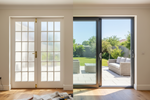
Most door replacement guides assume homeowners want to upgrade from sliding doors to French doors. But plenty of homeowners are asking the opposite: how do I replace my French doors with sliding doors? The reasons are practical and legitimate. This guide covers when the switch makes sense, whether your opening is compatible, what to check before ordering, and the step-by-step installation process.
Yes, French doors can be replaced with sliding doors. In most cases the rough opening is compatible, since both door types share standard widths of 60 to 72 inches. A building permit is required in most US jurisdictions, and professional installation is recommended for correct weatherproofing and track alignment. A same-size direct swap is a one to two-day project for an experienced contractor.

5 Reasons Homeowners Switch from French Doors to Sliding Doors
The switch from French to sliding doors is driven by real practical concerns. Any of the following situations justifies the change:
- Swing arc conflicts with the space: French doors require 24 to 36 inches of clear clearance on the opening side. Inswing doors conflict with furniture and foot traffic; outswing doors hit deck railings and narrow patios. Sliding doors eliminate the arc by moving panels parallel to the wall.
- Accessibility or ease of operation: Sliding doors require only a horizontal push or pull along a track. For elderly residents, people with limited mobility, or anyone with an injury, this operational difference justifies the replacement cost on its own.
- Safety for young children or pets: Swinging French doors pose a hazard for anyone standing on the swing side when the door opens. Sliding panels move parallel to the wall and eliminate this risk entirely.
- Contemporary renovation direction: Slim-frame sliding doors with large uninterrupted glass panels suit contemporary and minimalist remodels better than traditional French door profiles. This is a legitimate aesthetic reason, especially during a full interior renovation.
- Persistent astragal sealing or maintenance issues: The center seam where French door panels meet is the most maintenance-intensive element of the assembly. Sliding doors eliminate the astragal seam entirely, removing the source of recurring draft and sealing issues.
Is the Switch Justified for Your Situation?
If three or more of the above triggers apply, changing to sliding doors is well justified. If only one applies, consider targeted solutions first such as an outswing conversion or a sliding French door hybrid before committing to a full replacement.
|
Trigger |
Applies? |
|
Swing arc blocks furniture or daily traffic flow |
Yes / No |
|
Outswing doors contact railing, furniture, or narrow patio |
Yes / No |
|
Accessibility or ease of operation is a household concern |
Yes / No |
|
Contemporary remodel makes French profile visually inconsistent |
Yes / No |
|
Persistent astragal sealing or maintenance issues with current doors |
Yes / No |
Three or more: switching to sliding is well justified. One or two: explore targeted solutions before committing to a full replacement.
See more: French Doors vs Patio Doors: Real Differences and How to Choose for Your Home
Is the Opening Compatible? What to Check Before Ordering
The feasibility of the project depends on whether the existing rough opening matches a standard sliding door width. Confirming this before ordering prevents the most common and most expensive planning mistake in any door swap.
Opening Compatibility Table
|
Existing French Door Width |
Compatible Sliding Door Size |
Modification Needed? |
|
60 inches (5 ft pair) |
60-inch sliding door unit |
None — direct swap possible |
|
72 inches (6 ft pair) |
72-inch sliding door unit |
None — direct swap possible |
|
72 inches (6 ft pair) |
60-inch sliding door unit |
Opening reduced with framing — lower cost than custom door |
|
96 inches (8 ft pair) |
96-inch sliding door unit |
None if rough opening matches |
|
Custom or non-standard width |
Nearest standard sliding door size |
Framing modification required |
Most residential French door installations use 60 or 72-inch standard widths that align directly with standard sliding door units. A direct swap with no structural modification is possible in the majority of residential cases.
Threshold and Track System Compatibility
French doors use a raised threshold with compression weatherstripping at the base of each panel. Sliding doors use a flat aluminum or composite track mounted at floor level. In most installations, the difference is addressed with a transition threshold piece during installation. However, if the existing French door installation used a custom-built raised threshold or the subfloor was modified specifically for the French door, additional carpentry may be needed to bring the floor to the correct level for the sliding track system. Confirm this with the installer before finalizing the door selection, as it is a cost item frequently left out of early contractor quotes.
When a Permit Is Required
A building permit is required in most US jurisdictions when any of the following conditions apply: the rough opening size changes; structural framing including the header is modified; or exterior cladding is disturbed. For a same-size direct swap with no structural work, some jurisdictions allow an exemption, but this varies significantly by city and county. Always check with the local building department before starting. Reputable contractors include permit filing in their quotes. Unpermitted structural work creates compliance issues at the time of home sale.
See more: How to Replace a Sliding Glass Door with French Doors: Cost, Steps and What to Know

How the Process Works: Step by Step
For a same-size direct swap, changing French doors to sliding doors is a one to two-day project for an experienced contractor. The steps below follow the standard sequence used for most residential replacements.
Step 1: Measure and confirm the rough opening. Measure the rough opening width at three points (top, middle, bottom) and use the smallest measurement. Confirm the rough opening height as well. Cross-reference both dimensions against the sliding door unit specifications before placing the order.
Step 2: Remove the French door unit. Unscrew the hinges on both panels and remove each door. Detach the astragal strip from the inactive panel. Remove the door frame from the rough opening by unscrewing it from the jack studs and header. Set all hardware aside.
Step 3: Inspect the rough opening. Check the header, jack studs, and sill for rot, water infiltration, or structural damage. Any deterioration found at this stage must be repaired before the new door is installed. This is also the point to confirm whether the existing threshold and subfloor level are compatible with the sliding door track system.
Step 4: Prepare the opening for the sliding door frame. If the rough opening needs to be narrowed to fit a smaller sliding unit, add framing to the jack studs. Apply a continuous bead of sill pan flashing tape along the bottom of the rough opening before the door frame is set. This is the most critical waterproofing step and must be done before installation begins.
Step 5: Set and level the sliding door frame. Place the door frame unit into the rough opening. Shim the frame until it is plumb on both sides, level at the top, and square at all corners. Anchor the frame to the framing with screws through the pre-drilled holes in the jamb. Do not overtighten; the frame must remain straight for the panel to slide correctly.
Step 6: Install the track and hang the sliding panel. Install the bottom track along the threshold. Lift the sliding panel onto the top track first, then lower the bottom rollers onto the bottom track. Test the panel across the full width of the opening to confirm it slides smoothly without resistance or wobble. Adjust the roller height using the adjustment screws on the base of the panel if needed.
Step 7: Weatherproof and finish. Apply exterior flashing tape along both side jambs and the head jamb. Caulk all exterior joints between the door frame and the exterior cladding. Install interior trim on both sides of the door. Apply a final bead of interior caulk along the trim edges. Confirm the locking hardware engages correctly at both the frame and the panel before closing out the project.

DIY vs Professional
A same-size direct swap with no structural modification is achievable for an experienced DIYer comfortable with framing, shimming, and weatherproofing. The most common DIY errors are insufficient weatherproofing at the threshold transition and improper leveling of the track, both of which cause long-term performance problems that are expensive to correct after installation. Any project involving rough opening modification, header adjustment, or exterior cladding work should be handled by a licensed contractor.
See more: Should French Doors Open In or Out? Complete Installation Guide
The Middle Ground: Sliding French Doors
For homeowners whose primary issue is the swing arc rather than the French door aesthetic itself, one option sits between the two categories and is worth considering before committing to a full style change.
A sliding French patio door uses the same frame profile, glass configuration, and hardware language as a traditional swinging French door, but the panels travel along a track rather than swinging on hinges. This eliminates the swing arc problem entirely while preserving the visual character of the original doors. Sliding French doors are available in two-panel configurations at 60 to 96 inches wide and can typically fit the same rough opening as a standard sliding door. The cost falls between a standard sliding door and a hinged French door pair. For homeowners who love the look of their current French doors but need to resolve the swing problem, this option avoids a full aesthetic change.
See more: How Much Does a French Door Cost? Tips to Save Your Money
Final Thoughts
Changing French doors to sliding doors is a practical, well-justified project for homeowners dealing with swing arc constraints, accessibility needs, or a design direction that calls for slimmer sightlines. Most French door openings align directly with standard sliding door sizes, which keeps the project manageable. For homeowners who want sliding function without losing the French door aesthetic, a sliding French door resolves both concerns at once.
Changing French Doors to Sliding Doors: Is It Worth It?

Most door replacement guides assume homeowners want to upgrade from sliding doors to French doors. But plenty of homeowners are asking the opposite: how do I replace my French doors with sliding doors? The reasons are practical and legitimate. This guide covers when the switch makes sense, whether your opening is compatible, what to check before ordering, and the step-by-step installation process.
Yes, French doors can be replaced with sliding doors. In most cases the rough opening is compatible, since both door types share standard widths of 60 to 72 inches. A building permit is required in most US jurisdictions, and professional installation is recommended for correct weatherproofing and track alignment. A same-size direct swap is a one to two-day project for an experienced contractor.
5 Reasons Homeowners Switch from French Doors to Sliding Doors
The switch from French to sliding doors is driven by real practical concerns. Any of the following situations justifies the change:
- Swing arc conflicts with the space: French doors require 24 to 36 inches of clear clearance on the opening side. Inswing doors conflict with furniture and foot traffic; outswing doors hit deck railings and narrow patios. Sliding doors eliminate the arc by moving panels parallel to the wall.
- Accessibility or ease of operation: Sliding doors require only a horizontal push or pull along a track. For elderly residents, people with limited mobility, or anyone with an injury, this operational difference justifies the replacement cost on its own.
- Safety for young children or pets: Swinging French doors pose a hazard for anyone standing on the swing side when the door opens. Sliding panels move parallel to the wall and eliminate this risk entirely.
- Contemporary renovation direction: Slim-frame sliding doors with large uninterrupted glass panels suit contemporary and minimalist remodels better than traditional French door profiles. This is a legitimate aesthetic reason, especially during a full interior renovation.
- Persistent astragal sealing or maintenance issues: The center seam where French door panels meet is the most maintenance-intensive element of the assembly. Sliding doors eliminate the astragal seam entirely, removing the source of recurring draft and sealing issues.
Is the Switch Justified for Your Situation?
If three or more of the above triggers apply, changing to sliding doors is well justified. If only one applies, consider targeted solutions first such as an outswing conversion or a sliding French door hybrid before committing to a full replacement.
|
Trigger |
Applies? |
|
Swing arc blocks furniture or daily traffic flow |
Yes / No |
|
Outswing doors contact railing, furniture, or narrow patio |
Yes / No |
|
Accessibility or ease of operation is a household concern |
Yes / No |
|
Contemporary remodel makes French profile visually inconsistent |
Yes / No |
|
Persistent astragal sealing or maintenance issues with current doors |
Yes / No |
Three or more: switching to sliding is well justified. One or two: explore targeted solutions before committing to a full replacement.
See more: French Doors vs Patio Doors: Real Differences and How to Choose for Your Home
Is the Opening Compatible? What to Check Before Ordering
The feasibility of the project depends on whether the existing rough opening matches a standard sliding door width. Confirming this before ordering prevents the most common and most expensive planning mistake in any door swap.
Opening Compatibility Table
|
Existing French Door Width |
Compatible Sliding Door Size |
Modification Needed? |
|
60 inches (5 ft pair) |
60-inch sliding door unit |
None — direct swap possible |
|
72 inches (6 ft pair) |
72-inch sliding door unit |
None — direct swap possible |
|
72 inches (6 ft pair) |
60-inch sliding door unit |
Opening reduced with framing — lower cost than custom door |
|
96 inches (8 ft pair) |
96-inch sliding door unit |
None if rough opening matches |
|
Custom or non-standard width |
Nearest standard sliding door size |
Framing modification required |
Most residential French door installations use 60 or 72-inch standard widths that align directly with standard sliding door units. A direct swap with no structural modification is possible in the majority of residential cases.
Threshold and Track System Compatibility
French doors use a raised threshold with compression weatherstripping at the base of each panel. Sliding doors use a flat aluminum or composite track mounted at floor level. In most installations, the difference is addressed with a transition threshold piece during installation. However, if the existing French door installation used a custom-built raised threshold or the subfloor was modified specifically for the French door, additional carpentry may be needed to bring the floor to the correct level for the sliding track system. Confirm this with the installer before finalizing the door selection, as it is a cost item frequently left out of early contractor quotes.
When a Permit Is Required
A building permit is required in most US jurisdictions when any of the following conditions apply: the rough opening size changes; structural framing including the header is modified; or exterior cladding is disturbed. For a same-size direct swap with no structural work, some jurisdictions allow an exemption, but this varies significantly by city and county. Always check with the local building department before starting. Reputable contractors include permit filing in their quotes. Unpermitted structural work creates compliance issues at the time of home sale.
See more: How to Replace a Sliding Glass Door with French Doors: Cost, Steps and What to Know
How the Process Works: Step by Step
For a same-size direct swap, changing French doors to sliding doors is a one to two-day project for an experienced contractor. The steps below follow the standard sequence used for most residential replacements.
Step 1: Measure and confirm the rough opening. Measure the rough opening width at three points (top, middle, bottom) and use the smallest measurement. Confirm the rough opening height as well. Cross-reference both dimensions against the sliding door unit specifications before placing the order.
Step 2: Remove the French door unit. Unscrew the hinges on both panels and remove each door. Detach the astragal strip from the inactive panel. Remove the door frame from the rough opening by unscrewing it from the jack studs and header. Set all hardware aside.
Step 3: Inspect the rough opening. Check the header, jack studs, and sill for rot, water infiltration, or structural damage. Any deterioration found at this stage must be repaired before the new door is installed. This is also the point to confirm whether the existing threshold and subfloor level are compatible with the sliding door track system.
Step 4: Prepare the opening for the sliding door frame. If the rough opening needs to be narrowed to fit a smaller sliding unit, add framing to the jack studs. Apply a continuous bead of sill pan flashing tape along the bottom of the rough opening before the door frame is set. This is the most critical waterproofing step and must be done before installation begins.
Step 5: Set and level the sliding door frame. Place the door frame unit into the rough opening. Shim the frame until it is plumb on both sides, level at the top, and square at all corners. Anchor the frame to the framing with screws through the pre-drilled holes in the jamb. Do not overtighten; the frame must remain straight for the panel to slide correctly.
Step 6: Install the track and hang the sliding panel. Install the bottom track along the threshold. Lift the sliding panel onto the top track first, then lower the bottom rollers onto the bottom track. Test the panel across the full width of the opening to confirm it slides smoothly without resistance or wobble. Adjust the roller height using the adjustment screws on the base of the panel if needed.
Step 7: Weatherproof and finish. Apply exterior flashing tape along both side jambs and the head jamb. Caulk all exterior joints between the door frame and the exterior cladding. Install interior trim on both sides of the door. Apply a final bead of interior caulk along the trim edges. Confirm the locking hardware engages correctly at both the frame and the panel before closing out the project.
DIY vs Professional
A same-size direct swap with no structural modification is achievable for an experienced DIYer comfortable with framing, shimming, and weatherproofing. The most common DIY errors are insufficient weatherproofing at the threshold transition and improper leveling of the track, both of which cause long-term performance problems that are expensive to correct after installation. Any project involving rough opening modification, header adjustment, or exterior cladding work should be handled by a licensed contractor.
See more: Should French Doors Open In or Out? Complete Installation Guide
The Middle Ground: Sliding French Doors
For homeowners whose primary issue is the swing arc rather than the French door aesthetic itself, one option sits between the two categories and is worth considering before committing to a full style change.
A sliding French patio door uses the same frame profile, glass configuration, and hardware language as a traditional swinging French door, but the panels travel along a track rather than swinging on hinges. This eliminates the swing arc problem entirely while preserving the visual character of the original doors. Sliding French doors are available in two-panel configurations at 60 to 96 inches wide and can typically fit the same rough opening as a standard sliding door. The cost falls between a standard sliding door and a hinged French door pair. For homeowners who love the look of their current French doors but need to resolve the swing problem, this option avoids a full aesthetic change.
See more: How Much Does a French Door Cost? Tips to Save Your Money
Final Thoughts
Changing French doors to sliding doors is a practical, well-justified project for homeowners dealing with swing arc constraints, accessibility needs, or a design direction that calls for slimmer sightlines. Most French door openings align directly with standard sliding door sizes, which keeps the project manageable. For homeowners who want sliding function without losing the French door aesthetic, a sliding French door resolves both concerns at once.


