


Swing doors are the most common type of interior door, but they’re also one of the easiest to get wrong during planning. Many layout issues happen not because a door doesn’t fit the opening, but because there isn’t enough space for it to open comfortably.
Understanding door swing clearance helps prevent problems like doors hitting furniture, blocking walkways, or making small rooms feel cramped. This guide explains how swing door space works, how much clearance is typically needed, and when another door type may be a better solution.
What Is Door Swing Clearance?
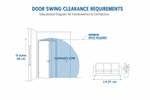
Door swing clearance refers to the amount of open space a door needs to fully open on its hinges without obstruction. When a swing door opens, it creates a curved arc that extends into the room or hallway.
This clearance must remain free of:
-
Furniture
-
Cabinets or vanities
-
Walls and corners
-
Fixtures like towel bars or radiators
A door may fit perfectly in its frame but still feel impractical if the swing space isn’t planned properly.
How Door Width Affects Swing Space
The most important rule of door swing clearance is simple:
A swing door needs roughly the same amount of clear space as its width.
Common Interior Door Sizes & Clearance
-
24” door → needs about 24” of clear swing space
-
28” door → needs about 28” of clear swing space
-
30” door → needs about 30” of clear swing space
-
32”–36” doors → need 32”–36” of unobstructed space
This clearance applies in the direction the door opens.

Why Swing Direction Matters
Swing direction is just as important as door size.
Inward-Swinging Doors
Most interior doors swing inward. This works well in rooms with enough floor space but can be problematic in tight areas like:
-
Small bathrooms
-
Narrow bedrooms
-
Closets near walkways
If the door swings inward and hits furniture or fixtures, usability drops fast.
Outward-Swinging Doors
Outward swings save interior space but must not block hallways or circulation paths. They’re less common inside homes but useful in very tight rooms where interior clearance is limited.
Common Door Swing Mistakes (And How to Avoid Them)
Door Hits Furniture
A common issue in bedrooms where doors collide with beds or dressers. This usually means:
-
The door is too wide for the room
-
The swing direction is wrong
Bathroom Doors Hitting Vanities
Bathrooms are especially prone to clearance issues. If the door hits a vanity or toilet, consider:
-
Changing swing direction
-
Switching to a pocket door

Doors Blocking Walkways
Doors that swing into hallways can interrupt traffic flow. This often happens near:
-
Closets
-
Laundry rooms
-
Small offices
When a Swing Door Is Not the Best Option
Swing doors aren’t always the best solution, especially in compact layouts. You may want to consider alternatives when clearance is limited.
Sliding (By-Pass) Doors
Best for closets and wide openings where swing clearance isn’t available.
Pocket Doors
Ideal for bathrooms, offices, and small rooms where every inch matters.
Barn Doors
Work well as a design feature but require clear wall space beside the opening.
If a door swing feels tight on paper, it will feel worse in real life.
Quick Planning Tips for Swing Door Clearance
-
Always visualize the door fully open at 90 degrees
-
Consider future furniture placement, not just current layout
-
Check both floor and wall-level obstructions
-
Remember that handles and hardware add extra projection
-
If clearance feels “barely enough,” it probably isn’t

Frequently Asked Questions About Door Swing Clearance
How much space does a swing door need to open?
A swing door typically needs clear space equal to its width. A 30-inch door needs about 30 inches of unobstructed swing space.
Can a swing door hit furniture?
Yes. This is one of the most common planning mistakes. Always confirm swing clearance before finalizing layout or furniture placement.
Is door swing clearance required by code?
Residential building codes focus on clear opening width rather than swing clearance. However, insufficient clearance can create usability and safety issues.
Can I change a door’s swing direction?
In many cases, yes. Changing the swing direction may require frame modification but can significantly improve room functionality.
What’s better for small rooms: swing or pocket doors?
Pocket doors are usually better for small rooms because they eliminate swing clearance entirely.
Conclusion
Door swing clearance plays a major role in how comfortable and functional a space feels. While swing doors are reliable and familiar, they require careful planning to avoid layout conflicts. By understanding how much space a swing door needs and when to consider alternative door types, you can prevent common mistakes and design a space that works smoothly every day.
How Much Space Does a Swing Door Need? Door Clearance Explained

Swing doors are the most common type of interior door, but they’re also one of the easiest to get wrong during planning. Many layout issues happen not because a door doesn’t fit the opening, but because there isn’t enough space for it to open comfortably.
Understanding door swing clearance helps prevent problems like doors hitting furniture, blocking walkways, or making small rooms feel cramped. This guide explains how swing door space works, how much clearance is typically needed, and when another door type may be a better solution.
What Is Door Swing Clearance?
Door swing clearance refers to the amount of open space a door needs to fully open on its hinges without obstruction. When a swing door opens, it creates a curved arc that extends into the room or hallway.
This clearance must remain free of:
-
Furniture
-
Cabinets or vanities
-
Walls and corners
-
Fixtures like towel bars or radiators
A door may fit perfectly in its frame but still feel impractical if the swing space isn’t planned properly.
How Door Width Affects Swing Space
The most important rule of door swing clearance is simple:
A swing door needs roughly the same amount of clear space as its width.
Common Interior Door Sizes & Clearance
-
24” door → needs about 24” of clear swing space
-
28” door → needs about 28” of clear swing space
-
30” door → needs about 30” of clear swing space
-
32”–36” doors → need 32”–36” of unobstructed space
This clearance applies in the direction the door opens.
Why Swing Direction Matters
Swing direction is just as important as door size.
Inward-Swinging Doors
Most interior doors swing inward. This works well in rooms with enough floor space but can be problematic in tight areas like:
-
Small bathrooms
-
Narrow bedrooms
-
Closets near walkways
If the door swings inward and hits furniture or fixtures, usability drops fast.
Outward-Swinging Doors
Outward swings save interior space but must not block hallways or circulation paths. They’re less common inside homes but useful in very tight rooms where interior clearance is limited.
Common Door Swing Mistakes (And How to Avoid Them)
Door Hits Furniture
A common issue in bedrooms where doors collide with beds or dressers. This usually means:
-
The door is too wide for the room
-
The swing direction is wrong
Bathroom Doors Hitting Vanities
Bathrooms are especially prone to clearance issues. If the door hits a vanity or toilet, consider:
-
Changing swing direction
-
Switching to a pocket door
Doors Blocking Walkways
Doors that swing into hallways can interrupt traffic flow. This often happens near:
-
Closets
-
Laundry rooms
-
Small offices
When a Swing Door Is Not the Best Option
Swing doors aren’t always the best solution, especially in compact layouts. You may want to consider alternatives when clearance is limited.
Sliding (By-Pass) Doors
Best for closets and wide openings where swing clearance isn’t available.
Pocket Doors
Ideal for bathrooms, offices, and small rooms where every inch matters.
Barn Doors
Work well as a design feature but require clear wall space beside the opening.
If a door swing feels tight on paper, it will feel worse in real life.
Quick Planning Tips for Swing Door Clearance
-
Always visualize the door fully open at 90 degrees
-
Consider future furniture placement, not just current layout
-
Check both floor and wall-level obstructions
-
Remember that handles and hardware add extra projection
-
If clearance feels “barely enough,” it probably isn’t
Frequently Asked Questions About Door Swing Clearance
How much space does a swing door need to open?
A swing door typically needs clear space equal to its width. A 30-inch door needs about 30 inches of unobstructed swing space.
Can a swing door hit furniture?
Yes. This is one of the most common planning mistakes. Always confirm swing clearance before finalizing layout or furniture placement.
Is door swing clearance required by code?
Residential building codes focus on clear opening width rather than swing clearance. However, insufficient clearance can create usability and safety issues.
Can I change a door’s swing direction?
In many cases, yes. Changing the swing direction may require frame modification but can significantly improve room functionality.
What’s better for small rooms: swing or pocket doors?
Pocket doors are usually better for small rooms because they eliminate swing clearance entirely.
Conclusion
Door swing clearance plays a major role in how comfortable and functional a space feels. While swing doors are reliable and familiar, they require careful planning to avoid layout conflicts. By understanding how much space a swing door needs and when to consider alternative door types, you can prevent common mistakes and design a space that works smoothly every day.
Recent Post

How to Cover Sliding Glass Doors: Best Window Treatment Ideas for Every Style and Budget
Read More
Standard Sliding Glass Door Sizes: Width, Height, Rough Opening, and How to Choose
Read More
