


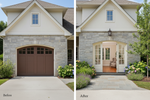
Replacing a garage door with French doors is one of the most dramatic exterior upgrades a homeowner can make. It changes how the space reads from the street, how much natural light enters the interior, and what the garage can ultimately become. This guide covers the full planning process, from measuring your opening and choosing the right door configuration to understanding costs, permits, and realistic timelines.
Can You Replace a Garage Door with French Doors?
The short answer is yes, and it is one of the more achievable large-scale exterior upgrades for a homeowner. The key challenge is not the door itself but the size mismatch: standard garage openings are significantly wider than standard French door units, so planning the right configuration is what separates a clean, finished result from a project that looks patched together.
Why the Opening Size Is the Central Challenge
A standard single-car garage opening runs 8 to 10 feet wide and 7 to 8 feet tall. Standard French door pairs top out at around 6 feet wide. That gap, typically 2 to 4 feet depending on your garage, is where the project either comes together cleanly or creates problems. Sidelites, which are fixed glass panels installed on either side of the French door unit, are the most common and effective solution. They fill the remaining width while maintaining the visual language of the French door design and bringing in additional natural light.

When Structural Work Is Required
Garage door headers are typically sized to span the full garage opening and are already load-bearing. When you reduce that opening by framing in a smaller rough opening for French doors, you are building a new non-load-bearing interior wall section within the existing garage frame. This is less structurally complex than widening an existing opening, but it still requires proper framing with pressure-treated sill plates on the concrete slab, correctly spaced studs, and a doubled 2x4 or 2x6 header above the new door rough opening. If your garage wall is a full exterior load-bearing wall with no existing header, consult a structural professional before altering the framing.
Sizing Your French Doors for a Garage Opening
Before ordering anything, you need to know how the French door unit and any sidelites will together fill your garage rough opening. Getting this right at the planning stage prevents costly custom orders, installation delays, and gaps that require improvised fixes on the job site.
Standard Garage Opening Widths and Recommended Configurations
|
Garage Type |
Typical Opening Width |
Recommended Configuration |
|
Single-car garage |
8 ft (96 in.) |
Two 32 in. French doors + two 12 in. sidelites |
|
Single-car (wider) |
9 to 10 ft |
Two 36 in. French doors + two 12 to 14 in. sidelites |
|
Double-car garage |
16 ft (192 in.) |
Two full door-and-sidelite sets with a center column, or one set plus partial wall infill |
|
Double-car (18 ft wide) |
18 ft |
Two full sets per half, or professional custom framing with infill panels |
Single-car garage openings are the most straightforward to convert because a standard double French door unit with two sidelites reliably fills an 8-foot opening. Double-car conversions require more planning and often involve either two separate door sets or a combination of a door set and a framed wall section on one side.
How Sidelites Fill the Gap
Sidelites are fixed glass panels that install in the same frame family as the French door unit. Standard widths run from 10 to 14 inches. They are typically ordered from the same manufacturer as the door to ensure the frame profiles, glass style, and finish match. Sidelites are non-operable, meaning they do not open, but they contribute significantly to the light and visual continuity of the installation. When calculating total width, remember that each framed door and sidelite unit runs slightly wider than its listed size, typically 1 to 1.5 inches per piece, so always confirm finished frame dimensions before committing to an opening size.

What to Do with a Double-Car Garage Opening
A 16-foot double-car opening is too wide for a single set of French doors and sidelites to fill cleanly. The two most practical approaches are installing two independent door sets, one on each half of the opening with a structural center column between them, or installing one full door set on one side and framing a partial wall section with windows on the other. The two-door-set approach is more expensive but delivers a more symmetrical, finished look. The single-set-plus-wall approach is more budget-friendly and works well when the garage is being repurposed and one side will have cabinetry, shelving, or a workbench in front of it.
See more: How Much Does a French Door Cost? Tips to Save Your Money
Explore exterior French door options for your garage conversion at Doors and Beyond: Browse French Doors at Doors and Beyond
Do You Need a Permit to Replace a Garage Door with French Doors?
Permit requirements are one of the most frequently misunderstood aspects of this project. The answer depends not just on what you are installing, but on how the garage is currently classified and what you plan to do with the space after the conversion.
When a Permit Is Almost Always Required
Any project that involves structural framing changes, including building a new rough opening inside the existing garage frame, requires a permit in most US jurisdictions. If you are converting the garage to a habitable space, a home office, a gym, or a living area, the project triggers a change-of-use classification that almost universally requires permits, plan review, and inspections. Even replacing the garage door without changing the opening can require a permit in some cities. San Diego, for example, classifies any modification to a garage opening as a permitted project regardless of habitability status. Before ordering your doors, contact your local building department and describe the project specifically.
When a Permit May Not Be Required
In some jurisdictions, a straightforward door replacement that uses the same rough opening dimensions, with no structural framing changes and no change of use, may not require a permit. Storage-only garages with no structural modification represent the lowest-risk scenario. However, even in these cases, the answer is jurisdiction-specific and the only reliable way to confirm is to ask your local building department directly. Do not rely on what a neighbor did or what a contractor assumes.

The Risk of Skipping the Permit
Proceeding without a required permit creates three concrete problems. First, inspectors and neighbors can spot new exterior doors easily, and unpermitted work frequently gets flagged through neighbor complaints, especially in dense residential neighborhoods. Second, unpermitted structural changes can void homeowner insurance coverage for related claims. Third, when you sell the property, the buyer's inspector will ask about the conversion, and undisclosed unpermitted work can derail a sale or require expensive remediation at closing. The permit fee itself is rarely more than a few hundred dollars, which is a small cost relative to the risks.
Explore French door options for your garage conversion at Doors and Beyond: Browse French Doors at Doors and Beyond
Step-by-Step Planning Process
A successful garage door to French door conversion follows a specific sequence. Rushing to order the door before confirming measurements and permit status is the most common reason these projects go over budget and over schedule.
Step 1: Measure the Garage Opening Accurately
Measure the rough opening width between the interior faces of the jack studs or the existing garage door jamb, not the face of the door itself. For height, measure from the concrete slab to the underside of the header. Write these numbers down before contacting any door supplier. Also check whether your garage floor has a slope toward the door opening. Most garage slabs slope approximately one quarter inch per foot toward the garage door for drainage, which can create a threshold complication if the new floor inside is intended to be level.
Step 2: Choose Your Door Configuration
Using the sizing table above, determine which combination of French doors and sidelites fills your opening. Confirm the exact finished frame dimensions with your door supplier before finalizing the order. If your opening is a non-standard width that does not align cleanly with available configurations, decide at this stage whether you will order custom sizing, adjust the rough opening during framing, or use additional wall infill material to close the gap.

Step 3: Confirm Permit Requirements Before Ordering
Call your local building department before placing any door order. Explain specifically what you are doing: removing an overhead garage door, framing a smaller rough opening inside the existing opening, and installing a pre-hung exterior French door unit. Ask whether this requires a permit and whether the planned use of the garage changes the classification. Permit processing times run from one to three weeks in most cities. Factor that window into your project start date.
Step 4: Order with Lead Time in Mind
Standard pre-hung French door units typically ship in two to four weeks from order. Custom-sized units or specialty finishes can take six to ten weeks. Sidelites ordered separately from the door unit can have different lead times, so confirm that all components from the same order will arrive together. Schedule your contractor for installation only after you have a confirmed delivery date. Starting the framing and demolition before the doors arrive is reasonable, but do not leave an open framed hole in your garage wall for more than a day or two.
See more: Should Patio Doors Swing In or Out? What Homeowners Need to Know
Project Timeline From Decision to Completion
Homeowners who plan this project carefully rarely encounter major delays. The two most common bottlenecks are permit processing time and door lead times, and both are predictable if you account for them upfront.
|
Phase |
What Happens |
Time Required |
|
Planning and measurement |
Finalize configuration, get contractor quotes, confirm permit requirements |
1 to 2 weeks |
|
Permit application |
Submit application to local building department and wait for approval |
1 to 3 weeks |
|
Door and sidelite ordering |
Lead time for standard pre-hung unit from manufacturer or supplier |
2 to 4 weeks |
|
Framing and rough opening prep |
Contractor removes overhead door system and builds new rough opening inside garage frame |
1 to 2 days |
|
Door installation and finishing |
Install pre-hung unit, trim casing, hardware, weatherstripping, exterior caulk |
1 to 2 days |
|
Inspection (if permitted) |
Building inspector sign-off on framing and installation |
1 to 3 business days after request |
|
Total project duration |
From initial decision to finished, inspected installation |
6 to 12 weeks total |
The six-to-twelve-week total timeline is driven almost entirely by permit processing and door lead times rather than actual labor. On-site work for a single-car garage conversion typically takes two to four days of contractor time. Planning these upstream steps before scheduling labor is what keeps the project on track and prevents expensive last-minute rushes on custom sizing or expedited shipping.
DIY or Professional Installation?
This is a more technically demanding project than replacing a standard patio door. The decision between DIY and professional installation should be based on specific scope requirements, not general confidence with home improvement tasks.
What Qualifies for DIY
Experienced DIYers with prior framing experience, including building rough openings and working with pressure-treated sill plates on concrete, can tackle a single-car conversion. The critical skills are accurate rough opening construction, proper sill pan and flashing installation to prevent water infiltration at the base of the door, and the ability to level and shim a heavy pre-hung unit on a surface that may not be perfectly flat. At minimum, two people are required to move and set a double door unit, and three people makes the process significantly safer and more accurate.

Why Most Homeowners Hire Professionals
Pre-hung exterior French doors with sidelites are large, heavy, and unforgiving of installation errors. A door that is not plumb and level will develop operational problems within months, including panels that swing open or closed on their own, weatherstripping that does not seal properly, and hardware that binds or misaligns. Professionals also bring proper flashing materials and technique, which is the single most important factor in preventing long-term water damage around an exterior door opening in a garage wall.
See more: Are French Doors More Secure Than Sliding Doors? A Full Comparison
Wrapping Up
Replacing a garage door with French doors is a project that rewards careful planning more than almost any other exterior upgrade. Getting the sizing configuration right, confirming permit requirements before ordering, and building in adequate lead time for door delivery are the three factors that consistently separate smooth conversions from costly ones. Plan those details correctly, and the transformation changes how the entire front of the home reads.
How to Replace a Garage Door with French Doors: Sizing, Cost & What to Plan Before You Start

Replacing a garage door with French doors is one of the most dramatic exterior upgrades a homeowner can make. It changes how the space reads from the street, how much natural light enters the interior, and what the garage can ultimately become. This guide covers the full planning process, from measuring your opening and choosing the right door configuration to understanding costs, permits, and realistic timelines.
Can You Replace a Garage Door with French Doors?
The short answer is yes, and it is one of the more achievable large-scale exterior upgrades for a homeowner. The key challenge is not the door itself but the size mismatch: standard garage openings are significantly wider than standard French door units, so planning the right configuration is what separates a clean, finished result from a project that looks patched together.
Why the Opening Size Is the Central Challenge
A standard single-car garage opening runs 8 to 10 feet wide and 7 to 8 feet tall. Standard French door pairs top out at around 6 feet wide. That gap, typically 2 to 4 feet depending on your garage, is where the project either comes together cleanly or creates problems. Sidelites, which are fixed glass panels installed on either side of the French door unit, are the most common and effective solution. They fill the remaining width while maintaining the visual language of the French door design and bringing in additional natural light.
When Structural Work Is Required
Garage door headers are typically sized to span the full garage opening and are already load-bearing. When you reduce that opening by framing in a smaller rough opening for French doors, you are building a new non-load-bearing interior wall section within the existing garage frame. This is less structurally complex than widening an existing opening, but it still requires proper framing with pressure-treated sill plates on the concrete slab, correctly spaced studs, and a doubled 2x4 or 2x6 header above the new door rough opening. If your garage wall is a full exterior load-bearing wall with no existing header, consult a structural professional before altering the framing.
Sizing Your French Doors for a Garage Opening
Before ordering anything, you need to know how the French door unit and any sidelites will together fill your garage rough opening. Getting this right at the planning stage prevents costly custom orders, installation delays, and gaps that require improvised fixes on the job site.
Standard Garage Opening Widths and Recommended Configurations
|
Garage Type |
Typical Opening Width |
Recommended Configuration |
|
Single-car garage |
8 ft (96 in.) |
Two 32 in. French doors + two 12 in. sidelites |
|
Single-car (wider) |
9 to 10 ft |
Two 36 in. French doors + two 12 to 14 in. sidelites |
|
Double-car garage |
16 ft (192 in.) |
Two full door-and-sidelite sets with a center column, or one set plus partial wall infill |
|
Double-car (18 ft wide) |
18 ft |
Two full sets per half, or professional custom framing with infill panels |
Single-car garage openings are the most straightforward to convert because a standard double French door unit with two sidelites reliably fills an 8-foot opening. Double-car conversions require more planning and often involve either two separate door sets or a combination of a door set and a framed wall section on one side.
How Sidelites Fill the Gap
Sidelites are fixed glass panels that install in the same frame family as the French door unit. Standard widths run from 10 to 14 inches. They are typically ordered from the same manufacturer as the door to ensure the frame profiles, glass style, and finish match. Sidelites are non-operable, meaning they do not open, but they contribute significantly to the light and visual continuity of the installation. When calculating total width, remember that each framed door and sidelite unit runs slightly wider than its listed size, typically 1 to 1.5 inches per piece, so always confirm finished frame dimensions before committing to an opening size.
What to Do with a Double-Car Garage Opening
A 16-foot double-car opening is too wide for a single set of French doors and sidelites to fill cleanly. The two most practical approaches are installing two independent door sets, one on each half of the opening with a structural center column between them, or installing one full door set on one side and framing a partial wall section with windows on the other. The two-door-set approach is more expensive but delivers a more symmetrical, finished look. The single-set-plus-wall approach is more budget-friendly and works well when the garage is being repurposed and one side will have cabinetry, shelving, or a workbench in front of it.
See more: How Much Does a French Door Cost? Tips to Save Your Money
Explore exterior French door options for your garage conversion at Doors and Beyond: Browse French Doors at Doors and Beyond
Do You Need a Permit to Replace a Garage Door with French Doors?
Permit requirements are one of the most frequently misunderstood aspects of this project. The answer depends not just on what you are installing, but on how the garage is currently classified and what you plan to do with the space after the conversion.
When a Permit Is Almost Always Required
Any project that involves structural framing changes, including building a new rough opening inside the existing garage frame, requires a permit in most US jurisdictions. If you are converting the garage to a habitable space, a home office, a gym, or a living area, the project triggers a change-of-use classification that almost universally requires permits, plan review, and inspections. Even replacing the garage door without changing the opening can require a permit in some cities. San Diego, for example, classifies any modification to a garage opening as a permitted project regardless of habitability status. Before ordering your doors, contact your local building department and describe the project specifically.
When a Permit May Not Be Required
In some jurisdictions, a straightforward door replacement that uses the same rough opening dimensions, with no structural framing changes and no change of use, may not require a permit. Storage-only garages with no structural modification represent the lowest-risk scenario. However, even in these cases, the answer is jurisdiction-specific and the only reliable way to confirm is to ask your local building department directly. Do not rely on what a neighbor did or what a contractor assumes.
The Risk of Skipping the Permit
Proceeding without a required permit creates three concrete problems. First, inspectors and neighbors can spot new exterior doors easily, and unpermitted work frequently gets flagged through neighbor complaints, especially in dense residential neighborhoods. Second, unpermitted structural changes can void homeowner insurance coverage for related claims. Third, when you sell the property, the buyer's inspector will ask about the conversion, and undisclosed unpermitted work can derail a sale or require expensive remediation at closing. The permit fee itself is rarely more than a few hundred dollars, which is a small cost relative to the risks.
Explore French door options for your garage conversion at Doors and Beyond: Browse French Doors at Doors and Beyond
Step-by-Step Planning Process
A successful garage door to French door conversion follows a specific sequence. Rushing to order the door before confirming measurements and permit status is the most common reason these projects go over budget and over schedule.
Step 1: Measure the Garage Opening Accurately
Measure the rough opening width between the interior faces of the jack studs or the existing garage door jamb, not the face of the door itself. For height, measure from the concrete slab to the underside of the header. Write these numbers down before contacting any door supplier. Also check whether your garage floor has a slope toward the door opening. Most garage slabs slope approximately one quarter inch per foot toward the garage door for drainage, which can create a threshold complication if the new floor inside is intended to be level.
Step 2: Choose Your Door Configuration
Using the sizing table above, determine which combination of French doors and sidelites fills your opening. Confirm the exact finished frame dimensions with your door supplier before finalizing the order. If your opening is a non-standard width that does not align cleanly with available configurations, decide at this stage whether you will order custom sizing, adjust the rough opening during framing, or use additional wall infill material to close the gap.
Step 3: Confirm Permit Requirements Before Ordering
Call your local building department before placing any door order. Explain specifically what you are doing: removing an overhead garage door, framing a smaller rough opening inside the existing opening, and installing a pre-hung exterior French door unit. Ask whether this requires a permit and whether the planned use of the garage changes the classification. Permit processing times run from one to three weeks in most cities. Factor that window into your project start date.
Step 4: Order with Lead Time in Mind
Standard pre-hung French door units typically ship in two to four weeks from order. Custom-sized units or specialty finishes can take six to ten weeks. Sidelites ordered separately from the door unit can have different lead times, so confirm that all components from the same order will arrive together. Schedule your contractor for installation only after you have a confirmed delivery date. Starting the framing and demolition before the doors arrive is reasonable, but do not leave an open framed hole in your garage wall for more than a day or two.
See more: Should Patio Doors Swing In or Out? What Homeowners Need to Know
Project Timeline From Decision to Completion
Homeowners who plan this project carefully rarely encounter major delays. The two most common bottlenecks are permit processing time and door lead times, and both are predictable if you account for them upfront.
|
Phase |
What Happens |
Time Required |
|
Planning and measurement |
Finalize configuration, get contractor quotes, confirm permit requirements |
1 to 2 weeks |
|
Permit application |
Submit application to local building department and wait for approval |
1 to 3 weeks |
|
Door and sidelite ordering |
Lead time for standard pre-hung unit from manufacturer or supplier |
2 to 4 weeks |
|
Framing and rough opening prep |
Contractor removes overhead door system and builds new rough opening inside garage frame |
1 to 2 days |
|
Door installation and finishing |
Install pre-hung unit, trim casing, hardware, weatherstripping, exterior caulk |
1 to 2 days |
|
Inspection (if permitted) |
Building inspector sign-off on framing and installation |
1 to 3 business days after request |
|
Total project duration |
From initial decision to finished, inspected installation |
6 to 12 weeks total |
The six-to-twelve-week total timeline is driven almost entirely by permit processing and door lead times rather than actual labor. On-site work for a single-car garage conversion typically takes two to four days of contractor time. Planning these upstream steps before scheduling labor is what keeps the project on track and prevents expensive last-minute rushes on custom sizing or expedited shipping.
DIY or Professional Installation?
This is a more technically demanding project than replacing a standard patio door. The decision between DIY and professional installation should be based on specific scope requirements, not general confidence with home improvement tasks.
What Qualifies for DIY
Experienced DIYers with prior framing experience, including building rough openings and working with pressure-treated sill plates on concrete, can tackle a single-car conversion. The critical skills are accurate rough opening construction, proper sill pan and flashing installation to prevent water infiltration at the base of the door, and the ability to level and shim a heavy pre-hung unit on a surface that may not be perfectly flat. At minimum, two people are required to move and set a double door unit, and three people makes the process significantly safer and more accurate.
Why Most Homeowners Hire Professionals
Pre-hung exterior French doors with sidelites are large, heavy, and unforgiving of installation errors. A door that is not plumb and level will develop operational problems within months, including panels that swing open or closed on their own, weatherstripping that does not seal properly, and hardware that binds or misaligns. Professionals also bring proper flashing materials and technique, which is the single most important factor in preventing long-term water damage around an exterior door opening in a garage wall.
See more: Are French Doors More Secure Than Sliding Doors? A Full Comparison
Wrapping Up
Replacing a garage door with French doors is a project that rewards careful planning more than almost any other exterior upgrade. Getting the sizing configuration right, confirming permit requirements before ordering, and building in adequate lead time for door delivery are the three factors that consistently separate smooth conversions from costly ones. Plan those details correctly, and the transformation changes how the entire front of the home reads.


