


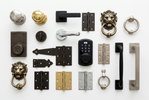
Door hardware does more than open and close a door. The different types of door hardware determine whether a room locks, whether a door is purely decorative, and how securely your home is protected. Buying the wrong type, or hardware that does not fit your door's thickness or bore hole, is a common and avoidable mistake. This guide breaks down every type, grade, and fit consideration you need.
Door hardware falls into four main function types: passage (no lock, for closets and hallways), privacy (basic lock, for bathrooms and bedrooms), dummy (decorative only, no latch), and keyed entry (locks with a key, for exterior doors). Hardware also comes in knob, lever, and handleset styles, rated by ANSI grade for security and durability.
Why Door Hardware Type Matters Before You Buy
The different types of door hardware are defined by two separate things: function, meaning how a piece locks or does not lock, and style, meaning whether it is a knob, lever, or full handleset. Choosing by looks alone often leads to buying privacy hardware for a closet that needed passage hardware, or discovering too late that a deadbolt does not fit the existing bore hole. Understanding function first, then style and grade, prevents returns and mismatched hardware across your home.

Types of Door Hardware Functions
Nearly every one of the different types of door hardware falls into one of four function categories. Knowing these types of door hardware functions before shopping narrows your options immediately and ensures the hardware actually does what the door requires.
Passage Hardware (No Lock)
Passage hardware has a latch to keep the door closed but no locking mechanism at all. It is the correct choice for closets, hallway doors, and other interior doors where privacy is not a concern.
Privacy Hardware (Basic Lock)
Privacy hardware includes a simple push-button or turn-button lock on the interior side, with no key required. This is the standard choice for bathrooms and bedrooms, where occupants need to lock the door temporarily but a lost key should never be a concern.
Dummy Hardware (Decorative Only)
Dummy hardware has no latch and no lock. It is fixed in place and used purely for appearance, most often on the inactive half of a double door or as a matching pull on a closet door that does not need to open independently.
Keyed Entry Hardware (Full Security)
Keyed entry hardware locks from the outside with a key and typically unlocks from the inside with a thumb-turn. This is the function required for exterior doors and is often paired with a separate deadbolt for a second layer of security.
|
Function |
Lock Type |
Best Used For |
Example Doors |
|
Passage |
None |
No privacy needed |
Closets, hallways |
|
Privacy |
Push or turn button |
Temporary privacy |
Bathrooms, bedrooms |
|
Dummy |
None (fixed, no latch) |
Decorative matching |
Inactive double door |
|
Keyed Entry |
Key cylinder |
Full security |
Front door, exterior doors |
Match the function to the door's purpose first. A closet never needs privacy hardware, and an exterior door should never rely on passage hardware alone, regardless of how the style matches the rest of the home.
Door Hardware Styles: Knobs, Levers, and Handlesets
Once the function is decided, the style determines how the hardware looks and operates physically. All three styles are available in every function type described above.
Door Knobs
Door knobs use a round grip that requires turning to retract the latch. Among interior door hardware types, knobs remain the most common style and offer a traditional appearance across nearly any home style.
Door Levers
Levers use a downward push motion instead of a twisting grip, making them easier to operate for anyone with limited hand strength. ADA-compliant lever models are required in many commercial and accessible residential applications.
Handlesets and Deadbolts
A handleset combines an exterior grip, a thumb latch, and a separate deadbolt into one coordinated unit for entry doors. Deadbolts come in single-cylinder, keyed outside with a thumb-turn inside, and double-cylinder, keyed on both sides, which adds security near glass panels but can slow emergency exits.
For help choosing a front door that pairs well with premium hardware, see: What Type of Door Is Best for a Front Door? A Complete Guide by Priority on the Doors and Beyond blog.

Understanding ANSI/BHMA Hardware Grades
Door hardware grades indicate how well a lock or latch performs under real-world use, independent of its style or finish. The American National Standards Institute and the Builders Hardware Manufacturers Association jointly publish these ratings after testing for cycle count, strength, and security.
Grade 1, 2, and 3 Explained
Grade 1 is the highest rating, built to withstand over a million open-close cycles and commonly required for commercial entries. Grade 2 offers a solid mid-range balance of durability and cost suited to most residential front doors. Grade 3 is the baseline residential grade, acceptable for interior doors and lower-traffic applications but not recommended for a primary entry.
Which Grade Do You Actually Need?
For a primary front door, Grade 2 or Grade 1 hardware is worth the added cost given how frequently the door is used and its role in home security. Interior doors, including closets, bedrooms, and bathrooms, perform well with Grade 3 hardware since they see less traffic and carry no security requirement.
Essential Door Hardware Parts to Know
A handful of terms come up repeatedly when shopping for door hardware or discussing it with a professional. The escutcheon is the decorative plate surrounding a knob or lever. The strike plate is the metal plate on the door jamb that receives the latch or deadbolt. The spindle is the internal rod connecting the exterior and interior knobs through the door. The backset is the distance from the door's edge to the center of the bore hole, almost always 2-3/8 or 2-3/4 inches on US residential doors.
For a complete glossary of door components beyond hardware, see: Door Parts Names: A Complete Glossary on the Doors and Beyond blog.
How to Measure for Replacement Door Hardware
Buying door hardware that does not match your door's existing dimensions is one of the most common and frustrating mistakes homeowners make. Three measurements determine fit before you purchase anything.
Door Thickness
Measure the door's edge with a tape measure. Standard interior doors are 1-3/8 inches thick, while exterior doors are typically 1-3/4 inches. Most hardware is adjustable within a small range, but confirm compatibility before buying for a non-standard door.
Backset
Measure from the edge of the door to the center of the existing bore hole. The two standard US measurements are 2-3/8 and 2-3/4 inches. Many modern locksets ship adjustable for both, but older or specialty hardware may require an exact match.
Bore Hole Diameter
Measure the diameter of the large hole that houses the lock body, typically 2-1/8 inches for knobs, levers, and handlesets, though deadbolts sometimes use a 1-1/2 inch hole on older doors. Replacement hardware needs to match this diameter, or the installer will need to re-bore the door.

Choosing Hardware by Door Type
The material and configuration of the door itself affects which door hardware performs best and installs most easily. This is where generic hardware guides fall short, since the door and the hardware need to work together as a system.
For background on how different door materials perform over time, see: Types of Door Material: What Works Best for Your Home on the Doors and Beyond blog.
Hardware for Wood Doors
Wood doors accept standard bore holes cleanly and work with virtually any knob, lever, or handleset style. Over time, wood can swell or shrink seasonally, so confirm the latch still aligns with the strike plate each season rather than assuming hardware fit is permanent.
Hardware for Steel and Fiberglass Doors
Steel and fiberglass doors are typically pre-reinforced at the lock location, making them well suited to Grade 1 or Grade 2 handlesets and deadbolts. Confirm the hardware's screws are long enough to reach the reinforced area inside the door for maximum security.
Hardware for French and Double Doors
French and double doors need hardware on both panels: typically keyed entry or a handleset on the active door and dummy hardware on the inactive door, paired with an astragal and flush bolts or a multi-point lock to secure the inactive panel at the top and bottom.
|
Door Type |
Recommended Hardware |
Notes |
|
Wood |
Any knob, lever, or handleset |
Recheck strike plate alignment seasonally |
|
Steel / Fiberglass |
Grade 1-2 handleset with deadbolt |
Confirm screws reach reinforced area |
|
French / Double Doors |
Keyed entry or handleset plus dummy hardware |
Pair with astragal and flush bolts or multi-point lock |
Matching hardware to the door material takes priority over matching it to room decor. A beautiful handleset that cannot properly secure a steel door's reinforced lock area is a security gap regardless of its finish.
For more on sealing and securing French doors specifically, see: How to Seal French Doors for Winter: A Complete Zone-by-Zone Guide on the Doors and Beyond blog.
Smart and Electronic Door Hardware
Electronic deadbolts and smart locks are among the newest types of door hardware, now fitting the same bore holes and backsets as traditional hardware to make them a drop-in option for most exterior doors. They add keyless entry via code, app, or key fob while typically retaining a physical key override. Consider one wherever keyless convenience or remote access matters, while keeping traditional keyed hardware on interior and secondary doors where it remains more practical and affordable.
Doors and Beyond carries exterior and interior doors pre-configured for standard hardware sizing, including options ready for Grade 1 and Grade 2 locksets. Browse European lever handlesets at doorsandbeyond.com/collections/european-levers or call 888-221-7848 to speak with a door specialist.

Frequently Asked Questions
What is the difference between passage and privacy hardware?
Passage hardware has no lock at all and is used where privacy is not needed, such as closets and hallways. Privacy hardware adds a basic push-button or turn-button lock without a key, suited to bathrooms and bedrooms.
What ANSI grade should I choose for a front door?
Grade 2 is the practical minimum for a front door given how frequently it is used, with Grade 1 offering the highest available durability and security for homeowners who want the best available protection.
How do I know my door's backset?
Measure from the edge of the door to the center of the existing bore hole. Nearly all US residential doors use either a 2-3/8 inch or 2-3/4 inch backset, and many modern locksets are adjustable to fit both.
What type of hardware works best for French doors?
The active door typically uses keyed entry hardware or a full handleset, while the inactive door uses dummy hardware paired with an astragal and flush bolts, or a multi-point lock system that secures both panels at once.
Can I mix door knob brands and still use the same key?
Generally no. Keyed-alike systems only work reliably within the same brand and product line. Mixing brands typically means each lock requires its own separate key.
What is dummy hardware used for?
Dummy hardware has no latch or lock and serves a purely decorative or matching purpose, most commonly on the inactive panel of a double door where functional hardware is not needed.
Choosing the right types of door hardware comes down to matching function to the door's purpose, style to the home's look, and grade to how often the door is used. Measure thickness, backset, and bore hole before buying, and match hardware to the door's material for a setup that performs as well as it looks.
Door Hardware Types: A Complete Guide to Functions, Grades, and Fit

Door hardware does more than open and close a door. The different types of door hardware determine whether a room locks, whether a door is purely decorative, and how securely your home is protected. Buying the wrong type, or hardware that does not fit your door's thickness or bore hole, is a common and avoidable mistake. This guide breaks down every type, grade, and fit consideration you need.
Door hardware falls into four main function types: passage (no lock, for closets and hallways), privacy (basic lock, for bathrooms and bedrooms), dummy (decorative only, no latch), and keyed entry (locks with a key, for exterior doors). Hardware also comes in knob, lever, and handleset styles, rated by ANSI grade for security and durability.
Why Door Hardware Type Matters Before You Buy
The different types of door hardware are defined by two separate things: function, meaning how a piece locks or does not lock, and style, meaning whether it is a knob, lever, or full handleset. Choosing by looks alone often leads to buying privacy hardware for a closet that needed passage hardware, or discovering too late that a deadbolt does not fit the existing bore hole. Understanding function first, then style and grade, prevents returns and mismatched hardware across your home.
Types of Door Hardware Functions
Nearly every one of the different types of door hardware falls into one of four function categories. Knowing these types of door hardware functions before shopping narrows your options immediately and ensures the hardware actually does what the door requires.
Passage Hardware (No Lock)
Passage hardware has a latch to keep the door closed but no locking mechanism at all. It is the correct choice for closets, hallway doors, and other interior doors where privacy is not a concern.
Privacy Hardware (Basic Lock)
Privacy hardware includes a simple push-button or turn-button lock on the interior side, with no key required. This is the standard choice for bathrooms and bedrooms, where occupants need to lock the door temporarily but a lost key should never be a concern.
Dummy Hardware (Decorative Only)
Dummy hardware has no latch and no lock. It is fixed in place and used purely for appearance, most often on the inactive half of a double door or as a matching pull on a closet door that does not need to open independently.
Keyed Entry Hardware (Full Security)
Keyed entry hardware locks from the outside with a key and typically unlocks from the inside with a thumb-turn. This is the function required for exterior doors and is often paired with a separate deadbolt for a second layer of security.
|
Function |
Lock Type |
Best Used For |
Example Doors |
|
Passage |
None |
No privacy needed |
Closets, hallways |
|
Privacy |
Push or turn button |
Temporary privacy |
Bathrooms, bedrooms |
|
Dummy |
None (fixed, no latch) |
Decorative matching |
Inactive double door |
|
Keyed Entry |
Key cylinder |
Full security |
Front door, exterior doors |
Match the function to the door's purpose first. A closet never needs privacy hardware, and an exterior door should never rely on passage hardware alone, regardless of how the style matches the rest of the home.
Door Hardware Styles: Knobs, Levers, and Handlesets
Once the function is decided, the style determines how the hardware looks and operates physically. All three styles are available in every function type described above.
Door Knobs
Door knobs use a round grip that requires turning to retract the latch. Among interior door hardware types, knobs remain the most common style and offer a traditional appearance across nearly any home style.
Door Levers
Levers use a downward push motion instead of a twisting grip, making them easier to operate for anyone with limited hand strength. ADA-compliant lever models are required in many commercial and accessible residential applications.
Handlesets and Deadbolts
A handleset combines an exterior grip, a thumb latch, and a separate deadbolt into one coordinated unit for entry doors. Deadbolts come in single-cylinder, keyed outside with a thumb-turn inside, and double-cylinder, keyed on both sides, which adds security near glass panels but can slow emergency exits.
For help choosing a front door that pairs well with premium hardware, see: What Type of Door Is Best for a Front Door? A Complete Guide by Priority on the Doors and Beyond blog.
Understanding ANSI/BHMA Hardware Grades
Door hardware grades indicate how well a lock or latch performs under real-world use, independent of its style or finish. The American National Standards Institute and the Builders Hardware Manufacturers Association jointly publish these ratings after testing for cycle count, strength, and security.
Grade 1, 2, and 3 Explained
Grade 1 is the highest rating, built to withstand over a million open-close cycles and commonly required for commercial entries. Grade 2 offers a solid mid-range balance of durability and cost suited to most residential front doors. Grade 3 is the baseline residential grade, acceptable for interior doors and lower-traffic applications but not recommended for a primary entry.
Which Grade Do You Actually Need?
For a primary front door, Grade 2 or Grade 1 hardware is worth the added cost given how frequently the door is used and its role in home security. Interior doors, including closets, bedrooms, and bathrooms, perform well with Grade 3 hardware since they see less traffic and carry no security requirement.
Essential Door Hardware Parts to Know
A handful of terms come up repeatedly when shopping for door hardware or discussing it with a professional. The escutcheon is the decorative plate surrounding a knob or lever. The strike plate is the metal plate on the door jamb that receives the latch or deadbolt. The spindle is the internal rod connecting the exterior and interior knobs through the door. The backset is the distance from the door's edge to the center of the bore hole, almost always 2-3/8 or 2-3/4 inches on US residential doors.
For a complete glossary of door components beyond hardware, see: Door Parts Names: A Complete Glossary on the Doors and Beyond blog.
How to Measure for Replacement Door Hardware
Buying door hardware that does not match your door's existing dimensions is one of the most common and frustrating mistakes homeowners make. Three measurements determine fit before you purchase anything.
Door Thickness
Measure the door's edge with a tape measure. Standard interior doors are 1-3/8 inches thick, while exterior doors are typically 1-3/4 inches. Most hardware is adjustable within a small range, but confirm compatibility before buying for a non-standard door.
Backset
Measure from the edge of the door to the center of the existing bore hole. The two standard US measurements are 2-3/8 and 2-3/4 inches. Many modern locksets ship adjustable for both, but older or specialty hardware may require an exact match.
Bore Hole Diameter
Measure the diameter of the large hole that houses the lock body, typically 2-1/8 inches for knobs, levers, and handlesets, though deadbolts sometimes use a 1-1/2 inch hole on older doors. Replacement hardware needs to match this diameter, or the installer will need to re-bore the door.
Choosing Hardware by Door Type
The material and configuration of the door itself affects which door hardware performs best and installs most easily. This is where generic hardware guides fall short, since the door and the hardware need to work together as a system.
For background on how different door materials perform over time, see: Types of Door Material: What Works Best for Your Home on the Doors and Beyond blog.
Hardware for Wood Doors
Wood doors accept standard bore holes cleanly and work with virtually any knob, lever, or handleset style. Over time, wood can swell or shrink seasonally, so confirm the latch still aligns with the strike plate each season rather than assuming hardware fit is permanent.
Hardware for Steel and Fiberglass Doors
Steel and fiberglass doors are typically pre-reinforced at the lock location, making them well suited to Grade 1 or Grade 2 handlesets and deadbolts. Confirm the hardware's screws are long enough to reach the reinforced area inside the door for maximum security.
Hardware for French and Double Doors
French and double doors need hardware on both panels: typically keyed entry or a handleset on the active door and dummy hardware on the inactive door, paired with an astragal and flush bolts or a multi-point lock to secure the inactive panel at the top and bottom.
|
Door Type |
Recommended Hardware |
Notes |
|
Wood |
Any knob, lever, or handleset |
Recheck strike plate alignment seasonally |
|
Steel / Fiberglass |
Grade 1-2 handleset with deadbolt |
Confirm screws reach reinforced area |
|
French / Double Doors |
Keyed entry or handleset plus dummy hardware |
Pair with astragal and flush bolts or multi-point lock |
Matching hardware to the door material takes priority over matching it to room decor. A beautiful handleset that cannot properly secure a steel door's reinforced lock area is a security gap regardless of its finish.
For more on sealing and securing French doors specifically, see: How to Seal French Doors for Winter: A Complete Zone-by-Zone Guide on the Doors and Beyond blog.
Smart and Electronic Door Hardware
Electronic deadbolts and smart locks are among the newest types of door hardware, now fitting the same bore holes and backsets as traditional hardware to make them a drop-in option for most exterior doors. They add keyless entry via code, app, or key fob while typically retaining a physical key override. Consider one wherever keyless convenience or remote access matters, while keeping traditional keyed hardware on interior and secondary doors where it remains more practical and affordable.
Doors and Beyond carries exterior and interior doors pre-configured for standard hardware sizing, including options ready for Grade 1 and Grade 2 locksets. Browse European lever handlesets at doorsandbeyond.com/collections/european-levers or call 888-221-7848 to speak with a door specialist.
Frequently Asked Questions
What is the difference between passage and privacy hardware?
Passage hardware has no lock at all and is used where privacy is not needed, such as closets and hallways. Privacy hardware adds a basic push-button or turn-button lock without a key, suited to bathrooms and bedrooms.
What ANSI grade should I choose for a front door?
Grade 2 is the practical minimum for a front door given how frequently it is used, with Grade 1 offering the highest available durability and security for homeowners who want the best available protection.
How do I know my door's backset?
Measure from the edge of the door to the center of the existing bore hole. Nearly all US residential doors use either a 2-3/8 inch or 2-3/4 inch backset, and many modern locksets are adjustable to fit both.
What type of hardware works best for French doors?
The active door typically uses keyed entry hardware or a full handleset, while the inactive door uses dummy hardware paired with an astragal and flush bolts, or a multi-point lock system that secures both panels at once.
Can I mix door knob brands and still use the same key?
Generally no. Keyed-alike systems only work reliably within the same brand and product line. Mixing brands typically means each lock requires its own separate key.
What is dummy hardware used for?
Dummy hardware has no latch or lock and serves a purely decorative or matching purpose, most commonly on the inactive panel of a double door where functional hardware is not needed.
Choosing the right types of door hardware comes down to matching function to the door's purpose, style to the home's look, and grade to how often the door is used. Measure thickness, backset, and bore hole before buying, and match hardware to the door's material for a setup that performs as well as it looks.


