


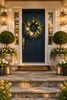
The best front door decor ideas combine seven elements: a statement door color or finish, upgraded hardware, symmetrical planters, layered lighting, a quality doormat, a seasonal accent like a wreath, and visible house numbers. Start with the door itself, then layer in accessories that match your home's architectural style and your personal aesthetic.
Your front door is the first detail visitors notice and the last they see as they leave. The right combination of color, hardware, plants, and lighting creates curb appeal without a major renovation. This guide covers the seven core elements of a well-decorated front door, ideas organized by home style, and a practical approach that works across every season.
The 7 Elements of a Well-Decorated Front Door
Most front door decor mistakes come not from choosing the wrong piece but from missing one or more of the seven elements that make an entrance feel complete. Understanding the framework before buying anything saves money and prevents the assembled-rather-than-designed look that plagues many home exteriors.
|
Element |
What It Does |
Impact Level |
|---|---|---|
|
Door color or finish |
Sets the dominant visual tone |
Very High |
|
Hardware (handle, knocker) |
Adds character and visual cohesion |
High |
|
Planters and greenery |
Frames the door, adds life and depth |
High |
|
Lighting (lanterns, sconces) |
Creates ambiance and improves safety |
High |
|
Doormat |
Grounds the entry, signals welcome |
Medium |
|
Seasonal accent (wreath, swag) |
Keeps the entrance feeling current |
Medium |
|
House numbers |
Adds polish and improves readability |
Medium |
Door color and hardware deliver the highest visual return per dollar and should be addressed first. Planters and lighting frame the door with three-dimensional depth. Doormats, wreaths, and house numbers complete the composition. When budget is limited, work from the top of this list downward.
Read more: What Is a Swing Door? Types of Swing Doors Explained
Modern Front Door Decor Ideas
Modern and contemporary homes have a specific design language that front door decor must respect. Restraint, material quality, and geometric precision do more work than abundance. These ideas are calibrated for homes with clean lines, large windows, and minimal exterior ornamentation.

Minimalist Hardware as a Statement
Matte black or brushed nickel hardware on a solid-color door creates a graphic, architectural look that reads immediately as intentional. Oversized lever handles, slab-style door knockers, and flush-mounted house numbers in clean geometric fonts are the right elements for a modern entry. Avoid decorative scrollwork or traditional brass, which conflict with contemporary geometry and suggest a different architectural era.
Architectural Planters and Structural Greenery
Tall, tapered concrete or dark-tone ceramic planters with upright plants create vertical symmetry without looking fussy. Italian cypresses, trimmed boxwoods, and olive trees maintain their structure year-round, which is essential for a modern entrance that should look composed at all times. Two identical planters flanking the door at matched heights is the most effective modern arrangement. Avoid round terracotta and overflowing seasonal florals, which suggest cottage rather than contemporary.
Statement Lighting Over Ambient Lighting
A single large-format pendant or oversized wall sconces on each side work better than small paired lanterns for modern homes. Matte black or brushed metal with a simple geometric shade aligns with the overall palette. Warm LED bulbs counter the visual coolness of dark modern exteriors. Avoid ornate lantern-style fixtures with glass panels and decorative ironwork, which conflict with the clean lines that define modern architecture.
A Bold Door Color on a Neutral Facade
Modern decor frequently relies on the door itself as the primary decorative element. A deeply saturated color, such as forest green, navy, or deep terracotta, on a gray, white, or off-white facade requires no additional decor to make a strong impression. This is the highest-impact, lowest-effort front door decor idea for modern homes and the one most frequently underused.
When the door itself is the statement, our modern doors collection offers clean-line configurations in a range of materials and finishes that serve as the foundation for every decor layer described in this guide.
Front Door Decor Ideas by Architectural Style
Decor that works on a farmhouse can look out of place on a craftsman, and what flatters a colonial can overwhelm a cottage. Matching the decor approach to the home's architecture is the fastest way to achieve coherence rather than clutter.
Traditional and Colonial Homes
Symmetry is the organizing principle for traditional entries. Matching black or bronze lanterns on each side, clipped boxwood topiaries in identical planters, a simple wreath with natural materials, and polished brass or oil-rubbed bronze hardware. The arrangement should feel formal and balanced. Asymmetry, bright colors, and industrial materials all conflict with the symmetrical facade that defines colonial and traditional architecture.

Craftsman and Farmhouse Homes
Warm metals, including antique brass, copper, and aged iron, anchor the palette for craftsman and farmhouse entries. Natural materials such as wood, stone, and wicker add texture that reinforces the handmade character. Layered greenery with seasonal florals, galvanized metal planters, lantern-style lighting, and a coir doormat are the core elements. Board-and-batten texture or a dutch-door configuration on the door itself reinforces the style further.
Coastal and Mediterranean Homes
Light, airy, and natural is the guiding principle for coastal entries. Sea-glass tones, whitewashed wood accents, terracotta planters with drought-tolerant plants, and rope or rattan accessories all suit coastal architecture. Avoid heavy metals and dark colors, which visually weigh down a facade designed to feel open and sun-filled. Large glass panels in the door itself are characteristic of coastal construction and should be showcased rather than framed with heavy decor.
Read more: How to Install Interior French Doors: Step-by-Step Guide
Seasonal Front Door Decoration Ideas
The easiest way to keep front door decor feeling current without major investment is to rotate seasonal pieces around a permanent base. Establish hardware, lighting, and planters as permanent elements, then swap only the accent layer with each season.
Spring and Summer
Lightweight wreaths of preserved or faux botanicals, fresh herbs in window boxes, and a bright-toned doormat signal the warmer months without committing to perishable arrangements. The goal is airy and welcoming rather than heavily decorated. A coat of fresh paint in a slightly lighter or bolder version of the existing door color refreshes the entry for the season at minimal cost.

Fall
Fall is the highest-engagement front door decor season in the US, and restraint is its most common casualty. Pumpkins and gourds in varied sizes and heights, dried grasses and cornstalks, and warm-toned wreaths of preserved fall leaves or seed pods work well. The key is editing ruthlessly: a few deliberate elements arranged at different heights read as intentional, while overcrowding the entry reads as impulsive. Rich amber and terracotta accent colors tie arrangements together.
Winter and Holiday
Fresh or faux evergreen wreaths with white lights on planters and door frame, and simple ribbon accents in a single coordinating color, create a winter entry that holds its appeal from late November through February. Avoid heavily themed seasonal decor that peaks on a single holiday and looks dated immediately after. A restrained, nature-based arrangement transitions cleanly from holiday to general winter without requiring a mid-season refresh.
How to Build a Cohesive Front Door Look: The Layered Approach
The difference between a front door that looks designed and one that looks assembled is layering, which means adding elements in the right sequence so each one builds on the last rather than competing with it.
Layer one is the foundation: the door itself. Its color, material, and condition define every choice that follows. Nothing you add as decor will compensate for a door that is chipped, warped, or the wrong style for the architecture. Before purchasing anything, assess the door honestly.
Layer two is structure: hardware and lighting. These elements are fixed, high-visibility, and define the finish palette for everything that follows. Match the metal finish consistently across the door handle, knocker, house numbers, and light fixtures. Mixing brass, chrome, and matte black reads as unplanned regardless of how carefully each individual piece was chosen.
Layer three is life: planters with greenery. Symmetrical placement at matched heights works for traditional and colonial homes. Asymmetrical arrangements can work for modern and eclectic styles but require more deliberate composition. At minimum, use plants that hold their shape year-round so the entry looks maintained regardless of season.
Layer four is the seasonal accent, which rotates while layers one through three remain constant. A wreath, a seasonally appropriate doormat, or a small decorative arrangement handles the fourth layer. Understanding this sequence is what separates intentional front door decoration ideas from reactive purchasing. For context on how door preparation affects your options at each layer, our guide on door slab vs prehung covers the differences that matter before any cosmetic work begins.

When Front Door Decor Is Not Enough: Signs It Is Time to Replace the Door
Decor can transform a good door, but it cannot rescue a door that has reached the end of its service life. Recognizing the signs early saves money that would otherwise go toward accessories that sit on a structurally compromised entry.
Visible warping, cracking, or persistent gaps along the frame signal that the door itself is the problem. No amount of planters or wreaths distracts from structural damage, and the energy loss through an improperly sealed door is a practical cost that mounts with every heating and cooling cycle.
Hardware that no longer aligns correctly and requires force or adjustment to engage communicates neglect regardless of how carefully the exterior has been styled. A door whose latch does not catch cleanly tells visitors something that a fresh coat of paint cannot override.
A finish that peels or bubbles repeatedly despite repainting indicates the door surface has lost its adhesion. Some door materials reach this point after prolonged exposure to UV and moisture. If paint will not hold, the solution is door replacement, not another coat.
A door that is fundamentally wrong for the home's architectural style limits every decorating decision made around it. A hollow-core residential door on a home that has been upgraded to modern or high-end traditional architecture pulls down the appearance of everything else at the entry.
When replacement makes more sense than another round of accessories, our interior French doors collection and full range of exterior configurations offer options that serve as the ideal foundation for every layer of front door decoration described in this guide.
Read more: What Is a Prehung Interior Door? Difference Between Prehung and Slab Door
Frequently Asked Questions About Front Door Decor Ideas
The following questions reflect what homeowners most often ask when planning a front door refresh for the first time or after an unsatisfying previous attempt.
What is the single most impactful front door decor change I can make?
Upgrading the hardware, specifically the handle and knocker in a matching finish, delivers the fastest visible change on an existing door. Combined with a fresh coat of paint in a deliberate color, these two changes transform a door's appearance for under $150 in most cases and require no professional installation.
How do I choose front door decor that matches my home's architectural style?
Start with the architectural character. Traditional and colonial homes suit symmetrical, formal arrangements with classic materials and brass or bronze metals. Modern homes suit restraint, geometric forms, and consistent dark metal finishes. Craftsman and farmhouse homes suit warm metals, natural materials, and layered greenery. Coastal homes suit light colors, airy plants, and natural textures. When in doubt, reduce rather than add.
Can I mix seasonal and year-round front door decor without it looking cluttered?
Yes, and this is the most sustainable approach. Establish permanent base elements including hardware, lighting, and planters. Rotate only the accent layer with each season, which means the wreath, doormat, and small decorative arrangements change while the underlying composition remains intact. This prevents the over-decorated look and reduces the total cost of seasonal refreshes significantly.
What plants work best for front door planters across most US climates?
Boxwoods, Italian cypress, and dwarf conifers are evergreen and require minimal care in most US zones. Ornamental grasses add movement and transition well across seasons. For climates with extreme heat or cold that limits live plant survival, faux options in UV-resistant materials are a practical and increasingly realistic-looking alternative, particularly for modern homes where structural form matters more than natural texture.
How do I make a small front entry look larger with decor?
Vertical elements draw the eye upward and create perceived height. Tall narrow planters, a vertically oriented wreath, and a wall-mounted lantern rather than a bracket-mounted one all extend the visual space. Keep the doormat proportional to the entry width and avoid large-scale horizontal arrangements that widen and visually lower a compact entry.
Conclusion
The most effective front door decor ideas follow a sequence: start with the door and hardware, add structure with lighting and planters, then rotate a seasonal accent layer throughout the year. Match every element to the home's architectural character rather than to current trends. A composed, layered entrance delivers more lasting curb appeal than any single decorative piece purchased without a framework.
Front Door Decor Ideas: 7 Elements, Modern Styles, and Seasonal Updates for Every Home

The best front door decor ideas combine seven elements: a statement door color or finish, upgraded hardware, symmetrical planters, layered lighting, a quality doormat, a seasonal accent like a wreath, and visible house numbers. Start with the door itself, then layer in accessories that match your home's architectural style and your personal aesthetic.
Your front door is the first detail visitors notice and the last they see as they leave. The right combination of color, hardware, plants, and lighting creates curb appeal without a major renovation. This guide covers the seven core elements of a well-decorated front door, ideas organized by home style, and a practical approach that works across every season.
The 7 Elements of a Well-Decorated Front Door
Most front door decor mistakes come not from choosing the wrong piece but from missing one or more of the seven elements that make an entrance feel complete. Understanding the framework before buying anything saves money and prevents the assembled-rather-than-designed look that plagues many home exteriors.
|
Element |
What It Does |
Impact Level |
|---|---|---|
|
Door color or finish |
Sets the dominant visual tone |
Very High |
|
Hardware (handle, knocker) |
Adds character and visual cohesion |
High |
|
Planters and greenery |
Frames the door, adds life and depth |
High |
|
Lighting (lanterns, sconces) |
Creates ambiance and improves safety |
High |
|
Doormat |
Grounds the entry, signals welcome |
Medium |
|
Seasonal accent (wreath, swag) |
Keeps the entrance feeling current |
Medium |
|
House numbers |
Adds polish and improves readability |
Medium |
Door color and hardware deliver the highest visual return per dollar and should be addressed first. Planters and lighting frame the door with three-dimensional depth. Doormats, wreaths, and house numbers complete the composition. When budget is limited, work from the top of this list downward.
Read more: What Is a Swing Door? Types of Swing Doors Explained
Modern Front Door Decor Ideas
Modern and contemporary homes have a specific design language that front door decor must respect. Restraint, material quality, and geometric precision do more work than abundance. These ideas are calibrated for homes with clean lines, large windows, and minimal exterior ornamentation.
Minimalist Hardware as a Statement
Matte black or brushed nickel hardware on a solid-color door creates a graphic, architectural look that reads immediately as intentional. Oversized lever handles, slab-style door knockers, and flush-mounted house numbers in clean geometric fonts are the right elements for a modern entry. Avoid decorative scrollwork or traditional brass, which conflict with contemporary geometry and suggest a different architectural era.
Architectural Planters and Structural Greenery
Tall, tapered concrete or dark-tone ceramic planters with upright plants create vertical symmetry without looking fussy. Italian cypresses, trimmed boxwoods, and olive trees maintain their structure year-round, which is essential for a modern entrance that should look composed at all times. Two identical planters flanking the door at matched heights is the most effective modern arrangement. Avoid round terracotta and overflowing seasonal florals, which suggest cottage rather than contemporary.
Statement Lighting Over Ambient Lighting
A single large-format pendant or oversized wall sconces on each side work better than small paired lanterns for modern homes. Matte black or brushed metal with a simple geometric shade aligns with the overall palette. Warm LED bulbs counter the visual coolness of dark modern exteriors. Avoid ornate lantern-style fixtures with glass panels and decorative ironwork, which conflict with the clean lines that define modern architecture.
A Bold Door Color on a Neutral Facade
Modern decor frequently relies on the door itself as the primary decorative element. A deeply saturated color, such as forest green, navy, or deep terracotta, on a gray, white, or off-white facade requires no additional decor to make a strong impression. This is the highest-impact, lowest-effort front door decor idea for modern homes and the one most frequently underused.
When the door itself is the statement, our modern doors collection offers clean-line configurations in a range of materials and finishes that serve as the foundation for every decor layer described in this guide.
Front Door Decor Ideas by Architectural Style
Decor that works on a farmhouse can look out of place on a craftsman, and what flatters a colonial can overwhelm a cottage. Matching the decor approach to the home's architecture is the fastest way to achieve coherence rather than clutter.
Traditional and Colonial Homes
Symmetry is the organizing principle for traditional entries. Matching black or bronze lanterns on each side, clipped boxwood topiaries in identical planters, a simple wreath with natural materials, and polished brass or oil-rubbed bronze hardware. The arrangement should feel formal and balanced. Asymmetry, bright colors, and industrial materials all conflict with the symmetrical facade that defines colonial and traditional architecture.
Craftsman and Farmhouse Homes
Warm metals, including antique brass, copper, and aged iron, anchor the palette for craftsman and farmhouse entries. Natural materials such as wood, stone, and wicker add texture that reinforces the handmade character. Layered greenery with seasonal florals, galvanized metal planters, lantern-style lighting, and a coir doormat are the core elements. Board-and-batten texture or a dutch-door configuration on the door itself reinforces the style further.
Coastal and Mediterranean Homes
Light, airy, and natural is the guiding principle for coastal entries. Sea-glass tones, whitewashed wood accents, terracotta planters with drought-tolerant plants, and rope or rattan accessories all suit coastal architecture. Avoid heavy metals and dark colors, which visually weigh down a facade designed to feel open and sun-filled. Large glass panels in the door itself are characteristic of coastal construction and should be showcased rather than framed with heavy decor.
Read more: How to Install Interior French Doors: Step-by-Step Guide
Seasonal Front Door Decoration Ideas
The easiest way to keep front door decor feeling current without major investment is to rotate seasonal pieces around a permanent base. Establish hardware, lighting, and planters as permanent elements, then swap only the accent layer with each season.
Spring and Summer
Lightweight wreaths of preserved or faux botanicals, fresh herbs in window boxes, and a bright-toned doormat signal the warmer months without committing to perishable arrangements. The goal is airy and welcoming rather than heavily decorated. A coat of fresh paint in a slightly lighter or bolder version of the existing door color refreshes the entry for the season at minimal cost.
Fall
Fall is the highest-engagement front door decor season in the US, and restraint is its most common casualty. Pumpkins and gourds in varied sizes and heights, dried grasses and cornstalks, and warm-toned wreaths of preserved fall leaves or seed pods work well. The key is editing ruthlessly: a few deliberate elements arranged at different heights read as intentional, while overcrowding the entry reads as impulsive. Rich amber and terracotta accent colors tie arrangements together.
Winter and Holiday
Fresh or faux evergreen wreaths with white lights on planters and door frame, and simple ribbon accents in a single coordinating color, create a winter entry that holds its appeal from late November through February. Avoid heavily themed seasonal decor that peaks on a single holiday and looks dated immediately after. A restrained, nature-based arrangement transitions cleanly from holiday to general winter without requiring a mid-season refresh.
How to Build a Cohesive Front Door Look: The Layered Approach
The difference between a front door that looks designed and one that looks assembled is layering, which means adding elements in the right sequence so each one builds on the last rather than competing with it.
Layer one is the foundation: the door itself. Its color, material, and condition define every choice that follows. Nothing you add as decor will compensate for a door that is chipped, warped, or the wrong style for the architecture. Before purchasing anything, assess the door honestly.
Layer two is structure: hardware and lighting. These elements are fixed, high-visibility, and define the finish palette for everything that follows. Match the metal finish consistently across the door handle, knocker, house numbers, and light fixtures. Mixing brass, chrome, and matte black reads as unplanned regardless of how carefully each individual piece was chosen.
Layer three is life: planters with greenery. Symmetrical placement at matched heights works for traditional and colonial homes. Asymmetrical arrangements can work for modern and eclectic styles but require more deliberate composition. At minimum, use plants that hold their shape year-round so the entry looks maintained regardless of season.
Layer four is the seasonal accent, which rotates while layers one through three remain constant. A wreath, a seasonally appropriate doormat, or a small decorative arrangement handles the fourth layer. Understanding this sequence is what separates intentional front door decoration ideas from reactive purchasing. For context on how door preparation affects your options at each layer, our guide on door slab vs prehung covers the differences that matter before any cosmetic work begins.
When Front Door Decor Is Not Enough: Signs It Is Time to Replace the Door
Decor can transform a good door, but it cannot rescue a door that has reached the end of its service life. Recognizing the signs early saves money that would otherwise go toward accessories that sit on a structurally compromised entry.
Visible warping, cracking, or persistent gaps along the frame signal that the door itself is the problem. No amount of planters or wreaths distracts from structural damage, and the energy loss through an improperly sealed door is a practical cost that mounts with every heating and cooling cycle.
Hardware that no longer aligns correctly and requires force or adjustment to engage communicates neglect regardless of how carefully the exterior has been styled. A door whose latch does not catch cleanly tells visitors something that a fresh coat of paint cannot override.
A finish that peels or bubbles repeatedly despite repainting indicates the door surface has lost its adhesion. Some door materials reach this point after prolonged exposure to UV and moisture. If paint will not hold, the solution is door replacement, not another coat.
A door that is fundamentally wrong for the home's architectural style limits every decorating decision made around it. A hollow-core residential door on a home that has been upgraded to modern or high-end traditional architecture pulls down the appearance of everything else at the entry.
When replacement makes more sense than another round of accessories, our interior French doors collection and full range of exterior configurations offer options that serve as the ideal foundation for every layer of front door decoration described in this guide.
Read more: What Is a Prehung Interior Door? Difference Between Prehung and Slab Door
Frequently Asked Questions About Front Door Decor Ideas
The following questions reflect what homeowners most often ask when planning a front door refresh for the first time or after an unsatisfying previous attempt.
What is the single most impactful front door decor change I can make?
Upgrading the hardware, specifically the handle and knocker in a matching finish, delivers the fastest visible change on an existing door. Combined with a fresh coat of paint in a deliberate color, these two changes transform a door's appearance for under $150 in most cases and require no professional installation.
How do I choose front door decor that matches my home's architectural style?
Start with the architectural character. Traditional and colonial homes suit symmetrical, formal arrangements with classic materials and brass or bronze metals. Modern homes suit restraint, geometric forms, and consistent dark metal finishes. Craftsman and farmhouse homes suit warm metals, natural materials, and layered greenery. Coastal homes suit light colors, airy plants, and natural textures. When in doubt, reduce rather than add.
Can I mix seasonal and year-round front door decor without it looking cluttered?
Yes, and this is the most sustainable approach. Establish permanent base elements including hardware, lighting, and planters. Rotate only the accent layer with each season, which means the wreath, doormat, and small decorative arrangements change while the underlying composition remains intact. This prevents the over-decorated look and reduces the total cost of seasonal refreshes significantly.
What plants work best for front door planters across most US climates?
Boxwoods, Italian cypress, and dwarf conifers are evergreen and require minimal care in most US zones. Ornamental grasses add movement and transition well across seasons. For climates with extreme heat or cold that limits live plant survival, faux options in UV-resistant materials are a practical and increasingly realistic-looking alternative, particularly for modern homes where structural form matters more than natural texture.
How do I make a small front entry look larger with decor?
Vertical elements draw the eye upward and create perceived height. Tall narrow planters, a vertically oriented wreath, and a wall-mounted lantern rather than a bracket-mounted one all extend the visual space. Keep the doormat proportional to the entry width and avoid large-scale horizontal arrangements that widen and visually lower a compact entry.
Conclusion
The most effective front door decor ideas follow a sequence: start with the door and hardware, add structure with lighting and planters, then rotate a seasonal accent layer throughout the year. Match every element to the home's architectural character rather than to current trends. A composed, layered entrance delivers more lasting curb appeal than any single decorative piece purchased without a framework.


