


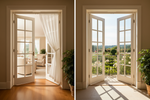
When planning a French door installation, one of the most common questions homeowners ask is whether the doors should open inward or outward. The opening direction affects space planning, security, weather resistance, and overall usability. Understanding how French doors are designed to swing helps ensure the installation works properly while fitting the layout of your home. Choosing the correct configuration can also improve daily convenience, protect the door hardware, and make the transition between indoor and outdoor spaces more comfortable.
Do French Doors Open In or Out?
French doors can open either inward or outward depending on the installation design, available space, and environmental conditions. Outward opening French doors are often used for patios because they save interior space and handle wind pressure better, while inward opening doors are sometimes preferred for balconies, interior rooms, or locations with heavy snowfall.
Both configurations are commonly used in residential construction, and each has practical benefits depending on the situation. Builders typically evaluate the surrounding layout, traffic flow, and weather exposure before deciding which direction the doors should swing. In many homes, patio French doors are designed to open outward to prevent them from interfering with indoor furniture placement, while interior French doors may open inward to maintain a natural flow between rooms.
Understanding how the door frame, hinges, and locking mechanisms work together is also important before installation. These structural components determine how the door will operate over time and how effectively it seals against weather conditions. To understand how door systems are structured before installation, see more:
https://doorsandbeyond.com/blogs/blog/the-essential-parts-of-a-door-all-you-need-to-know

French Doors Opening Inward vs Outward
The main difference between inward and outward opening French doors is the direction the panels swing when opened. Each configuration affects how space is used, how the door handles environmental pressure, and how secure the installation will be in everyday use.
Outward opening doors are often chosen for exterior entrances because they naturally compress against the frame when exposed to wind, creating a tighter seal. Inward opening doors, on the other hand, may be more practical for interior installations or locations where exterior obstacles prevent doors from swinging outward.
|
Feature |
Inward Opening French Doors |
Outward Opening French Doors |
|
Space usage |
Requires interior clearance |
Saves interior floor space |
|
Weather resistance |
Less effective in strong wind |
Better seal against wind pressure |
|
Security |
Hinges protected inside |
Requires secure exterior hinges |
|
Common installation |
Interior rooms or balconies |
Exterior patio doors |
Overall, outward opening doors are more common for exterior applications such as patios and garden entrances, while inward opening doors are frequently used for interior transitions between rooms. The decision should always consider both spatial constraints and environmental conditions.
Pros of French Doors Opening Outward
Outward opening French doors are widely used for exterior installations because they provide several practical advantages. One of the most significant benefits is the ability to save interior space. Since the doors swing toward the outside, homeowners can place furniture, rugs, or decorative elements closer to the doorway without restricting the movement of the door panels.
Another major advantage is improved resistance to wind and rain. When strong wind pushes against outward opening doors, it naturally presses the panels more firmly against the frame. This pressure helps maintain a tighter seal and reduces the chances of drafts or water infiltration during storms. For homes located in coastal or windy regions, this design can significantly improve durability and long term performance.

Outward opening French doors also create a more open connection between indoor living areas and outdoor spaces such as patios, gardens, or decks. When fully opened, the doors extend outward and leave the interior space unobstructed, making it easier to host gatherings or move large items between spaces.
Pros of French Doors Opening Inward
Inward opening French doors are often selected for architectural situations where exterior clearance is limited. For example, balconies, narrow patios, and elevated decks may not provide enough space for doors that swing outward. In these cases, inward opening doors ensure that the panels can move freely without colliding with railings, walls, or outdoor furniture.
Another advantage of inward opening doors is hinge protection. Because the hinges are positioned on the inside of the home, they are less exposed to outdoor weather conditions and potential tampering. This configuration can extend the lifespan of the hardware and reduce maintenance requirements over time.

In colder regions where snowfall is common, inward opening doors can also prevent snow accumulation from blocking the door from opening. If snow builds up outside the doorway, outward opening doors may become difficult to operate, while inward opening doors can still open normally.
How to Decide Which Way Your French Doors Should Open
Choosing the correct opening direction requires evaluating several practical factors, including the size of the room, surrounding architecture, climate conditions, and how frequently the door will be used. Homeowners should also consider how people will move through the doorway during everyday activities.
|
Situation |
Recommended Door Direction |
|
Patio or backyard entrance |
Outward opening |
|
Small balcony |
Inward opening |
|
Limited indoor space |
Outward opening |
|
Heavy snowfall region |
Inward opening |
|
Windy coastal area |
Outward opening |
This framework helps homeowners quickly determine which configuration is most suitable for their environment. In general, exterior doors benefit from outward opening designs because they maximize interior space and improve weather resistance. However, situations with limited exterior clearance or heavy snow accumulation may favor inward opening doors.
Exterior French Doors: Recommended Opening Direction
For most exterior installations, outward opening French doors are considered the most practical and efficient option. Because the doors swing away from the interior, they free up valuable floor space and prevent interference with furniture placement or walking paths inside the home.
Outward opening doors also perform better in areas exposed to strong wind or rain. The natural pressure created by wind helps keep the doors tightly sealed against the frame, which can reduce air leaks and improve energy efficiency.
Another advantage is improved functionality for outdoor entertaining. When both door panels are fully opened, the interior living space connects seamlessly with the patio or backyard area, creating a wide opening that allows easy movement between spaces.
If you are planning a patio renovation or door replacement, you can explore available options here:
https://doorsandbeyond.com/collections/interior-french-doors

Interior French Doors: Best Opening Direction
Interior French doors are more flexible in terms of swing direction because they are not exposed to weather conditions. In many homes, these doors open inward into a room because the door swing can easily be accommodated within the layout.
These doors are commonly installed between living rooms, dining areas, home offices, or libraries. The large glass panels allow natural light to pass through multiple rooms while still maintaining a sense of separation between spaces.
When planning interior installations, homeowners should consider how furniture placement and walking paths will interact with the door swing. Ensuring adequate clearance helps prevent the doors from obstructing everyday movement through the home.
For more guidance on how swing doors operate inside residential spaces, see more:
https://doorsandbeyond.com/blogs/blog/types-of-swing-doors

Common Mistakes When Choosing Door Swing Direction
One of the most common mistakes homeowners make when installing French doors is failing to evaluate the available clearance around the doorway. Doors that open inward may conflict with furniture, rugs, or cabinetry, while outward opening doors may collide with railings, walls, or outdoor walkways if the surrounding area is not measured carefully.
Another frequent mistake is ignoring local climate conditions. In regions with strong wind or heavy rainfall, choosing the wrong door orientation can affect the door's ability to seal properly against the frame. Over time, this may lead to drafts, water intrusion, or reduced energy efficiency.
Homeowners also sometimes overlook the long term usability of the door. A configuration that seems convenient during installation may become inconvenient if it blocks traffic flow or limits access to outdoor spaces. Planning the swing direction early during renovation or construction helps prevent these problems and ensures the door functions smoothly for many years.
For additional guidance on planning installations, see more:
https://doorsandbeyond.com/blogs/blog/how-to-install-french-doors

Frequently Asked Questions
Do French doors swing in or out
French doors can swing either inward or outward depending on the installation design and the location of the doorway. Exterior patio doors commonly swing outward because they save interior space and improve weather sealing, while interior French doors often swing inward to match the layout of indoor rooms.
Can French doors open outward
Yes, French doors can open outward, and this configuration is very common for exterior doors. Outward opening doors are often recommended for patio entrances because they maximize indoor space and provide better resistance to wind pressure.
Are outward opening French doors secure
Outward opening French doors can be very secure when they are installed with modern locking systems and reinforced hinges. Many high quality exterior French doors include multi point locking mechanisms that secure the door at several points along the frame.
Conclusion
French doors can open either inward or outward, and the best choice depends on space availability, climate conditions, and how the doorway connects interior and exterior areas. Outward opening doors are often recommended for patios and exterior entrances because they save interior space and improve weather resistance. Inward opening doors may work better for balconies or interior rooms where exterior clearance is limited. By carefully evaluating your layout and environmental conditions, you can select the door configuration that offers the best balance of practicality, durability, and architectural design.
Should French Doors Open In or Out? Complete Installation Guide

When planning a French door installation, one of the most common questions homeowners ask is whether the doors should open inward or outward. The opening direction affects space planning, security, weather resistance, and overall usability. Understanding how French doors are designed to swing helps ensure the installation works properly while fitting the layout of your home. Choosing the correct configuration can also improve daily convenience, protect the door hardware, and make the transition between indoor and outdoor spaces more comfortable.
Do French Doors Open In or Out?
French doors can open either inward or outward depending on the installation design, available space, and environmental conditions. Outward opening French doors are often used for patios because they save interior space and handle wind pressure better, while inward opening doors are sometimes preferred for balconies, interior rooms, or locations with heavy snowfall.
Both configurations are commonly used in residential construction, and each has practical benefits depending on the situation. Builders typically evaluate the surrounding layout, traffic flow, and weather exposure before deciding which direction the doors should swing. In many homes, patio French doors are designed to open outward to prevent them from interfering with indoor furniture placement, while interior French doors may open inward to maintain a natural flow between rooms.
Understanding how the door frame, hinges, and locking mechanisms work together is also important before installation. These structural components determine how the door will operate over time and how effectively it seals against weather conditions. To understand how door systems are structured before installation, see more:
https://doorsandbeyond.com/blogs/blog/the-essential-parts-of-a-door-all-you-need-to-know
French Doors Opening Inward vs Outward
The main difference between inward and outward opening French doors is the direction the panels swing when opened. Each configuration affects how space is used, how the door handles environmental pressure, and how secure the installation will be in everyday use.
Outward opening doors are often chosen for exterior entrances because they naturally compress against the frame when exposed to wind, creating a tighter seal. Inward opening doors, on the other hand, may be more practical for interior installations or locations where exterior obstacles prevent doors from swinging outward.
|
Feature |
Inward Opening French Doors |
Outward Opening French Doors |
|
Space usage |
Requires interior clearance |
Saves interior floor space |
|
Weather resistance |
Less effective in strong wind |
Better seal against wind pressure |
|
Security |
Hinges protected inside |
Requires secure exterior hinges |
|
Common installation |
Interior rooms or balconies |
Exterior patio doors |
Overall, outward opening doors are more common for exterior applications such as patios and garden entrances, while inward opening doors are frequently used for interior transitions between rooms. The decision should always consider both spatial constraints and environmental conditions.
Pros of French Doors Opening Outward
Outward opening French doors are widely used for exterior installations because they provide several practical advantages. One of the most significant benefits is the ability to save interior space. Since the doors swing toward the outside, homeowners can place furniture, rugs, or decorative elements closer to the doorway without restricting the movement of the door panels.
Another major advantage is improved resistance to wind and rain. When strong wind pushes against outward opening doors, it naturally presses the panels more firmly against the frame. This pressure helps maintain a tighter seal and reduces the chances of drafts or water infiltration during storms. For homes located in coastal or windy regions, this design can significantly improve durability and long term performance.
Outward opening French doors also create a more open connection between indoor living areas and outdoor spaces such as patios, gardens, or decks. When fully opened, the doors extend outward and leave the interior space unobstructed, making it easier to host gatherings or move large items between spaces.
Pros of French Doors Opening Inward
Inward opening French doors are often selected for architectural situations where exterior clearance is limited. For example, balconies, narrow patios, and elevated decks may not provide enough space for doors that swing outward. In these cases, inward opening doors ensure that the panels can move freely without colliding with railings, walls, or outdoor furniture.
Another advantage of inward opening doors is hinge protection. Because the hinges are positioned on the inside of the home, they are less exposed to outdoor weather conditions and potential tampering. This configuration can extend the lifespan of the hardware and reduce maintenance requirements over time.
In colder regions where snowfall is common, inward opening doors can also prevent snow accumulation from blocking the door from opening. If snow builds up outside the doorway, outward opening doors may become difficult to operate, while inward opening doors can still open normally.
How to Decide Which Way Your French Doors Should Open
Choosing the correct opening direction requires evaluating several practical factors, including the size of the room, surrounding architecture, climate conditions, and how frequently the door will be used. Homeowners should also consider how people will move through the doorway during everyday activities.
|
Situation |
Recommended Door Direction |
|
Patio or backyard entrance |
Outward opening |
|
Small balcony |
Inward opening |
|
Limited indoor space |
Outward opening |
|
Heavy snowfall region |
Inward opening |
|
Windy coastal area |
Outward opening |
This framework helps homeowners quickly determine which configuration is most suitable for their environment. In general, exterior doors benefit from outward opening designs because they maximize interior space and improve weather resistance. However, situations with limited exterior clearance or heavy snow accumulation may favor inward opening doors.
Exterior French Doors: Recommended Opening Direction
For most exterior installations, outward opening French doors are considered the most practical and efficient option. Because the doors swing away from the interior, they free up valuable floor space and prevent interference with furniture placement or walking paths inside the home.
Outward opening doors also perform better in areas exposed to strong wind or rain. The natural pressure created by wind helps keep the doors tightly sealed against the frame, which can reduce air leaks and improve energy efficiency.
Another advantage is improved functionality for outdoor entertaining. When both door panels are fully opened, the interior living space connects seamlessly with the patio or backyard area, creating a wide opening that allows easy movement between spaces.
If you are planning a patio renovation or door replacement, you can explore available options here:
https://doorsandbeyond.com/collections/interior-french-doors
Interior French Doors: Best Opening Direction
Interior French doors are more flexible in terms of swing direction because they are not exposed to weather conditions. In many homes, these doors open inward into a room because the door swing can easily be accommodated within the layout.
These doors are commonly installed between living rooms, dining areas, home offices, or libraries. The large glass panels allow natural light to pass through multiple rooms while still maintaining a sense of separation between spaces.
When planning interior installations, homeowners should consider how furniture placement and walking paths will interact with the door swing. Ensuring adequate clearance helps prevent the doors from obstructing everyday movement through the home.
For more guidance on how swing doors operate inside residential spaces, see more:
https://doorsandbeyond.com/blogs/blog/types-of-swing-doors
Common Mistakes When Choosing Door Swing Direction
One of the most common mistakes homeowners make when installing French doors is failing to evaluate the available clearance around the doorway. Doors that open inward may conflict with furniture, rugs, or cabinetry, while outward opening doors may collide with railings, walls, or outdoor walkways if the surrounding area is not measured carefully.
Another frequent mistake is ignoring local climate conditions. In regions with strong wind or heavy rainfall, choosing the wrong door orientation can affect the door's ability to seal properly against the frame. Over time, this may lead to drafts, water intrusion, or reduced energy efficiency.
Homeowners also sometimes overlook the long term usability of the door. A configuration that seems convenient during installation may become inconvenient if it blocks traffic flow or limits access to outdoor spaces. Planning the swing direction early during renovation or construction helps prevent these problems and ensures the door functions smoothly for many years.
For additional guidance on planning installations, see more:
https://doorsandbeyond.com/blogs/blog/how-to-install-french-doors
Frequently Asked Questions
Do French doors swing in or out
French doors can swing either inward or outward depending on the installation design and the location of the doorway. Exterior patio doors commonly swing outward because they save interior space and improve weather sealing, while interior French doors often swing inward to match the layout of indoor rooms.
Can French doors open outward
Yes, French doors can open outward, and this configuration is very common for exterior doors. Outward opening doors are often recommended for patio entrances because they maximize indoor space and provide better resistance to wind pressure.
Are outward opening French doors secure
Outward opening French doors can be very secure when they are installed with modern locking systems and reinforced hinges. Many high quality exterior French doors include multi point locking mechanisms that secure the door at several points along the frame.
Conclusion
French doors can open either inward or outward, and the best choice depends on space availability, climate conditions, and how the doorway connects interior and exterior areas. Outward opening doors are often recommended for patios and exterior entrances because they save interior space and improve weather resistance. Inward opening doors may work better for balconies or interior rooms where exterior clearance is limited. By carefully evaluating your layout and environmental conditions, you can select the door configuration that offers the best balance of practicality, durability, and architectural design.


